Quick answer: ice management means keeping ice from bonding to pavement in the first place (pretreatment), breaking up ice that forms (salting and de-icing), and stopping meltwater from refreezing (drainage and follow-up treatment). Around Lake Norman, freezing rain and overnight refreeze cause more slips than deep snow, so ice deserves as much planning as plowing.
Why ice is the bigger problem here
Our winter storms often hover near freezing. That means sleet, freezing rain, and snow that melts in the afternoon and refreezes overnight. A driveway can look clear at 3 p.m. and be glazed by 6 a.m.
Pretreatment: before the storm
Pretreatment means applying a de-icer to pavement before precipitation starts. It keeps the first layer of snow or ice from bonding to the surface, so clearing afterward is faster and leaves less residue ice. It works best when applied ahead of a forecast event on dry pavement and is less useful when a storm starts as heavy rain that washes it away.
Salting and de-icing: during and after
After plowing or shoveling, de-icer melts the thin layer left behind and anything that refreezes. How much and how often depends on temperature, sun exposure and traffic. Shaded and sloped areas usually need repeat visits.
Choosing a de-icer for your surface
No single product is right for every surface. Common options compare like this:
| Product | Works well for | Watch out for |
|---|---|---|
| Rock salt (sodium chloride) | General lots and drives in moderate cold | Can damage new concrete, plants and turf; less effective in hard cold |
| Calcium chloride | Colder temperatures, fast melting | Costs more; can be harsh on plants if overused |
| Magnesium chloride | Walkways and entries | Costs more than rock salt |
| Sand or grit | Traction on steep slopes | Doesn't melt ice; tracks indoors and can clog drains |
Protecting pavers, concrete and landscaping
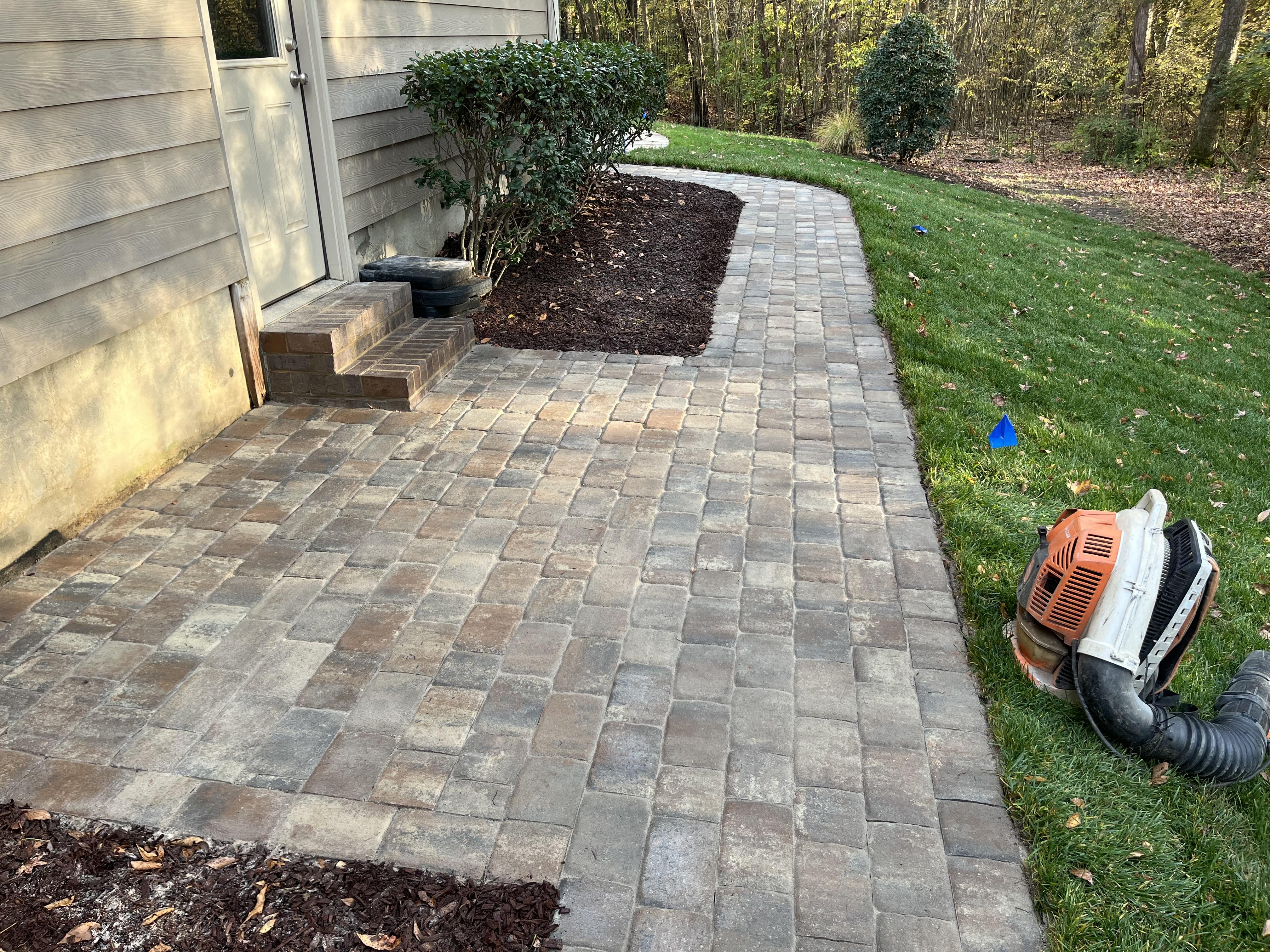
New concrete is the most vulnerable surface; many manufacturers advise against de-icing salts during the first winter. Pavers generally tolerate de-icers better, but metal plow blades can chip edges, so plowing around pavers needs care. Beds and turf along drives take the brunt of salt runoff — shovel snow away from plantings, not onto them.
Stopping refreeze with drainage
If the same spot ices every morning, the fix is often drainage, not more salt. Downspouts crossing walkways, low spots in the pavement and snow piles uphill of a walk all feed refreeze. Rerouting a downspout underground or adding a channel drain can eliminate a recurring ice patch.
Common mistakes
- Applying far more salt than needed — more doesn't melt faster and damages surfaces.
- Treating once and assuming the job is done when temperatures will drop again overnight.
- Piling snow uphill of walks and drives so meltwater runs across them.
- Using sand alone and expecting it to melt ice.
When to call a professional
If you manage a business, an HOA, or a steep drive, a contractor who pretreats, salts and returns for refreeze can keep surfaces safer than one-time clearing. We provide pretreatment, salting and de-icing, plowing, and walkway clearing for commercial and residential properties around Lake Norman.
Key takeaways
- Pretreat before a storm so ice can't bond to the pavement.
- Match the de-icer to the surface and temperature.
- Recurring ice patches usually point to a drainage problem.
Frequently asked questions
Is rock salt safe on pavers?
Pavers generally tolerate it better than new concrete, but check the manufacturer's guidance and avoid overapplying. Rinse heavy residue in spring.
Should I salt new concrete?
Many manufacturers advise against de-icing salts during a new slab's first winter. Use sand for traction or ask your installer what's safe.
What is pretreatment?
Applying de-icer to dry pavement before a storm so snow and ice don't bond to the surface, making clearing faster.
Why does the same spot ice every morning?
Usually meltwater from a downspout, a snow pile or a low spot refreezes overnight. Fixing the drainage often solves it.
Want this looked at on your property?
We give free, no-pressure on-site estimates across Denver, Mooresville, Cornelius, Davidson, Huntersville and Troutman.