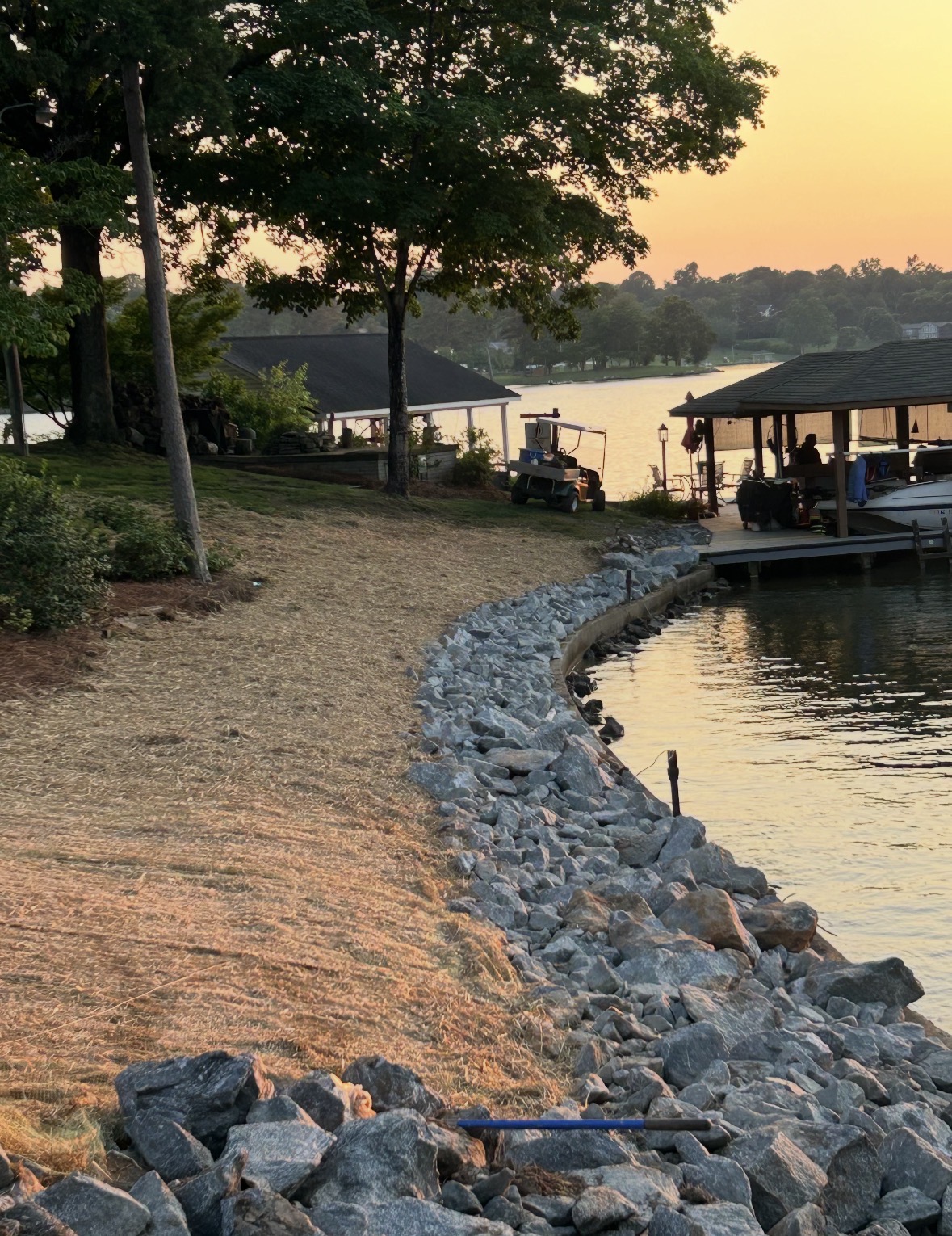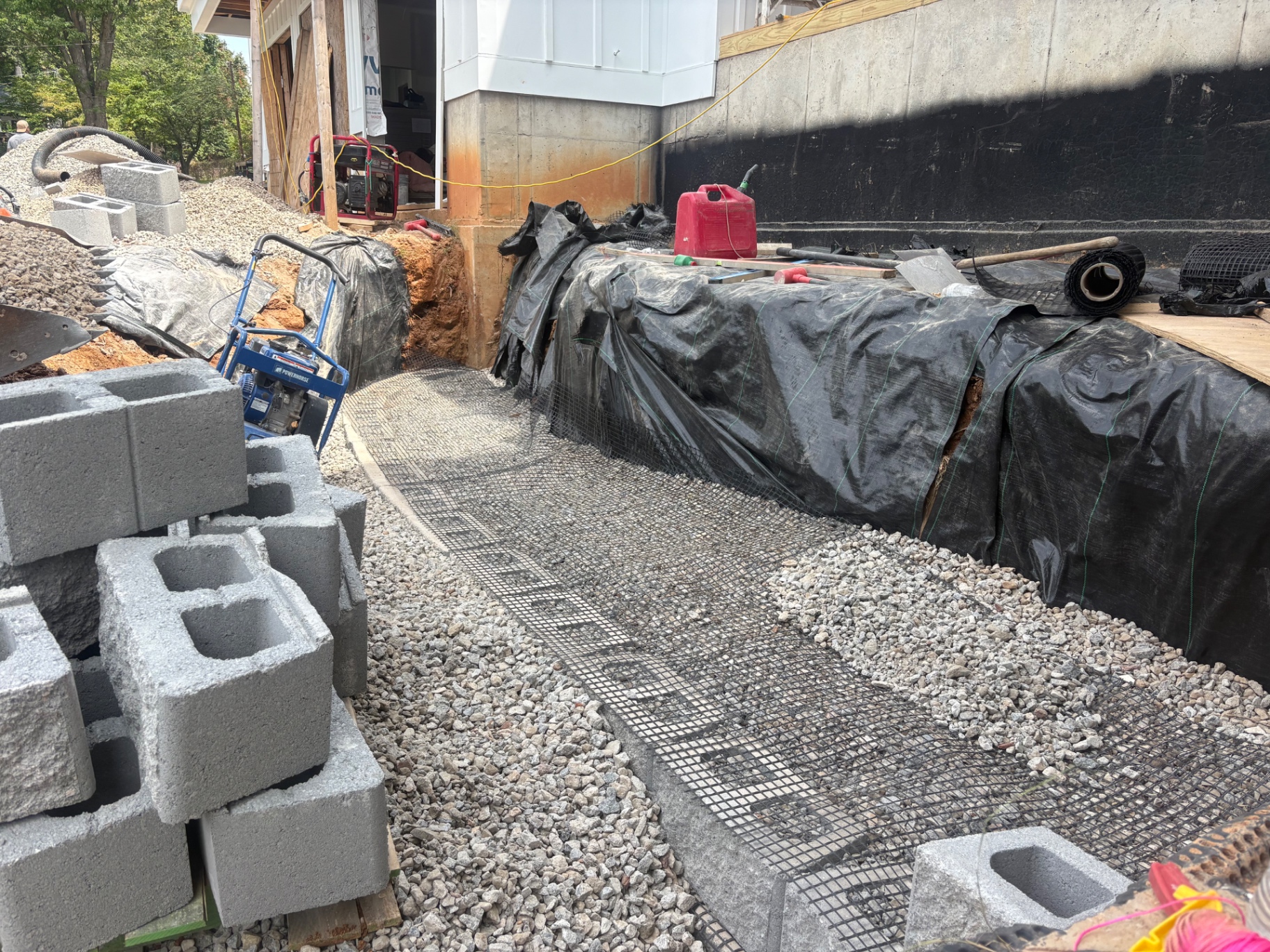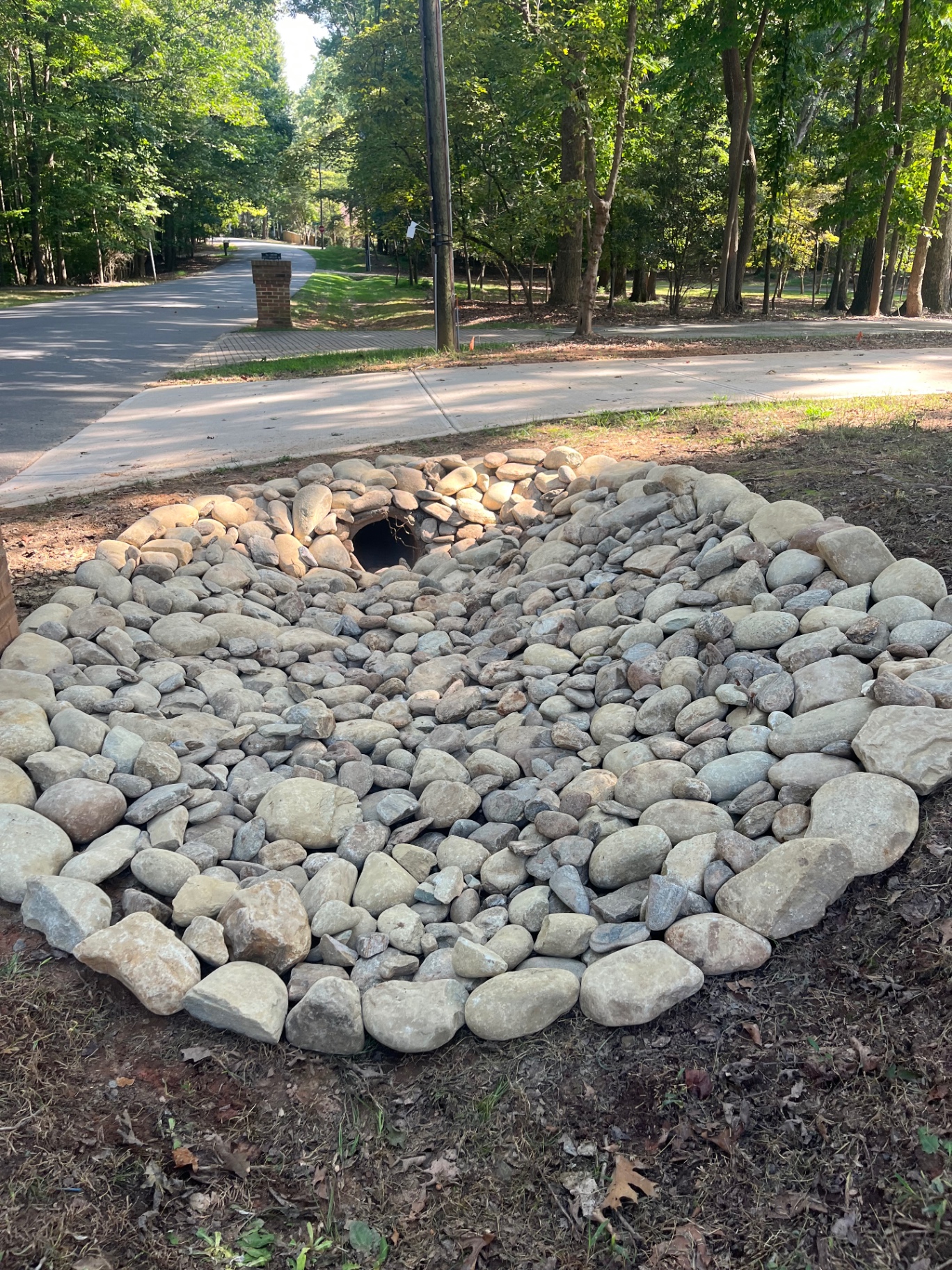
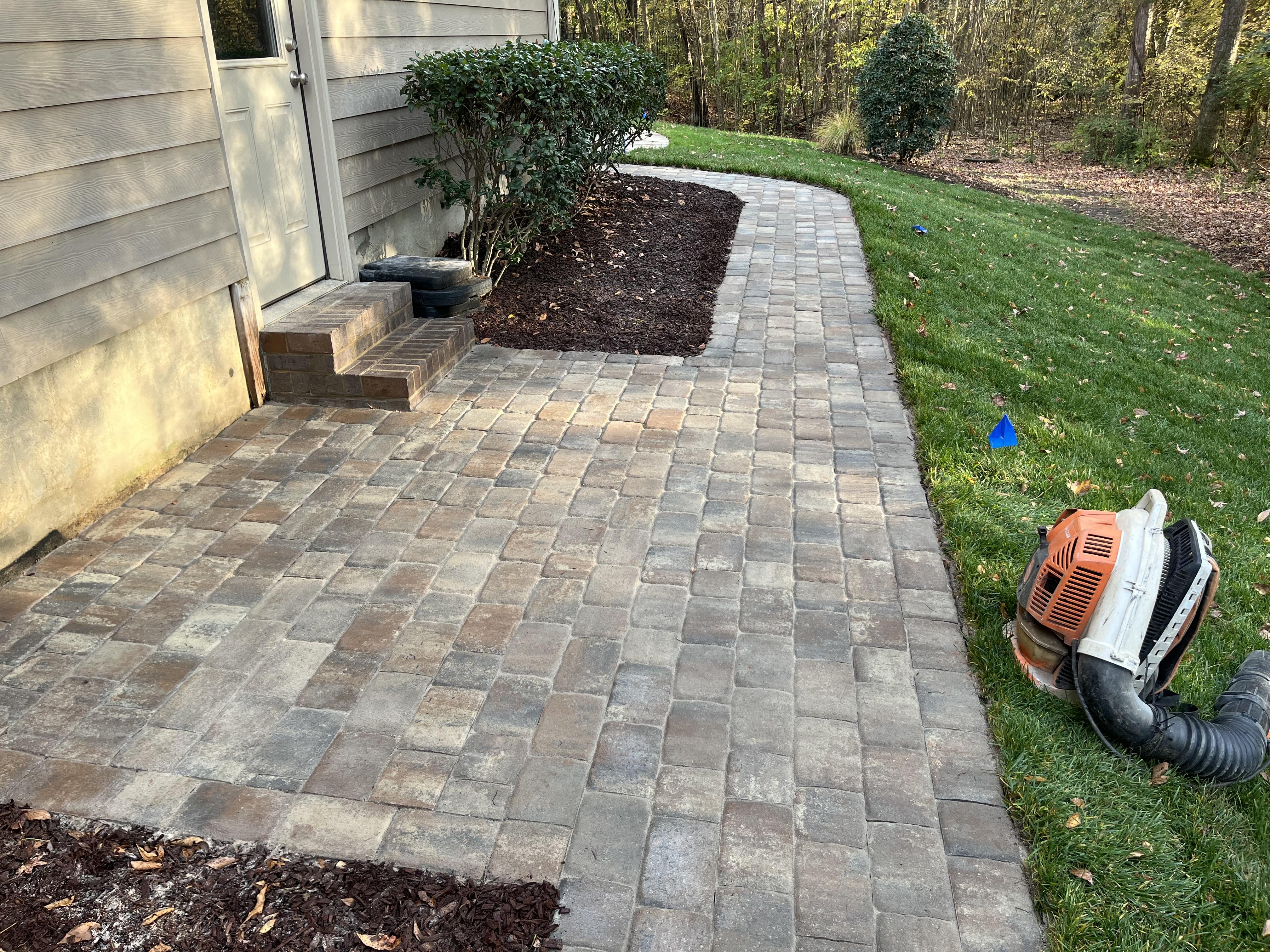
The riskiest moment for a property is the week the soil is open. Grading strips away everything holding the surface together, and a single heavy storm before stabilization can undo a lot of careful work.
Two different jobs
People lump these products together, but they do opposite things. Erosion control protects soil in place so it never moves. Sediment control catches soil that has already started moving before it leaves the site.
Blankets, matting, mulch, and quick cover crops are erosion control. Silt fence, wattles, and inlet protection are sediment control.
A good plan uses both, because no erosion measure is perfect during the first storms.
Erosion control blankets and matting
A blanket is a mesh-backed mat of straw, coconut fiber, or synthetic material rolled over seeded soil and stapled down. It keeps raindrops from dislodging soil, holds seed and moisture in place, and lets grass establish through it.
They are the standard answer on slopes too steep for mulch to stay put, along swale bottoms, and on any freshly seeded bank.
Installation details decide whether they work: soil contact across the whole mat, staples at the specified spacing, upslope ends trenched in, and overlaps shingled so water runs over seams rather than under them.
Silt fence and sediment control
Silt fence is a filter fabric supported by posts, installed along the downhill edge of disturbed soil. Runoff ponds behind it, sediment drops out, and cleaner water passes through.
It fails in predictable ways worth watching for:
- Fabric not trenched into the ground, so water simply runs underneath.
- Installed across a concentrated flow path instead of along a contour.
- Left in place until it is loaded with sediment and collapses.
- Ends not turned uphill, letting water run around the edge.
- Left in the ground long after the site has stabilized.
Other measures on residential sites
Straw wattles and compost socks work along contours to break slope length and slow sheet flow, and they are easier to work around than silt fence on small sites.
Inlet protection around a catch basin or street drain keeps sediment out of the storm system during construction.
A stone construction entrance knocks mud off tires before it ends up on the road — worth it on any project with sustained truck traffic.
Temporary measures, permanent solution
All of this is scaffolding. The permanent answer is established vegetation, stabilized slopes, and water that has a designed path — which is what our guide to stopping erosion on a sloped property covers.
That is why seeding, sod, or planting should be scheduled as close behind grading as the season allows, rather than leaving soil bare through a wet stretch.
Larger land-disturbing projects in North Carolina fall under erosion and sedimentation control requirements, so confirm with your local jurisdiction what applies to your project before soil is opened up. Southern Style Turf & Design handles erosion control as part of grading and site work around Lake Norman.
Helpful outside reference
North Carolina's rules for disturbed soil are explained by the NC DEQ erosion and sediment control program.
Frequently asked questions
Do I need silt fence for a small backyard project?
Requirements depend on the size of the disturbance and your jurisdiction. Even when not required, a short run of fence or a wattle below disturbed soil protects your neighbor's yard and the storm drain.
How long do erosion control blankets stay in place?
Biodegradable blankets break down over a season or two as the grass takes over. Synthetic matting can be permanent where it is used to reinforce a channel.
Can I just use straw mulch instead?
Loose straw works on gentle grades. On steeper slopes and in swales it washes off in the first storm, which is exactly where blankets earn their cost.
Want this looked at on your property?
We give free, no-pressure on-site estimates across Denver, Mooresville, Cornelius, Davidson, Huntersville and Troutman.