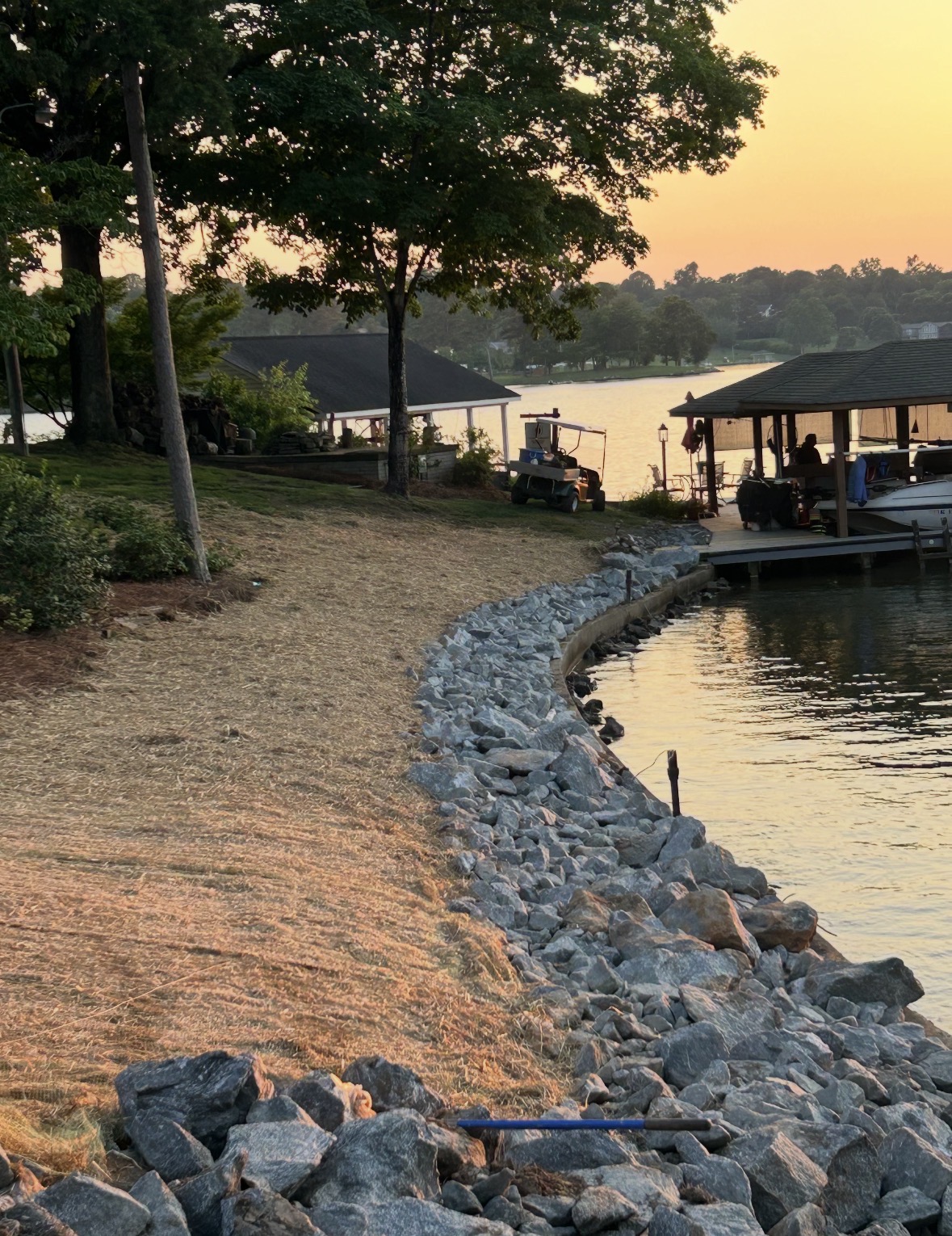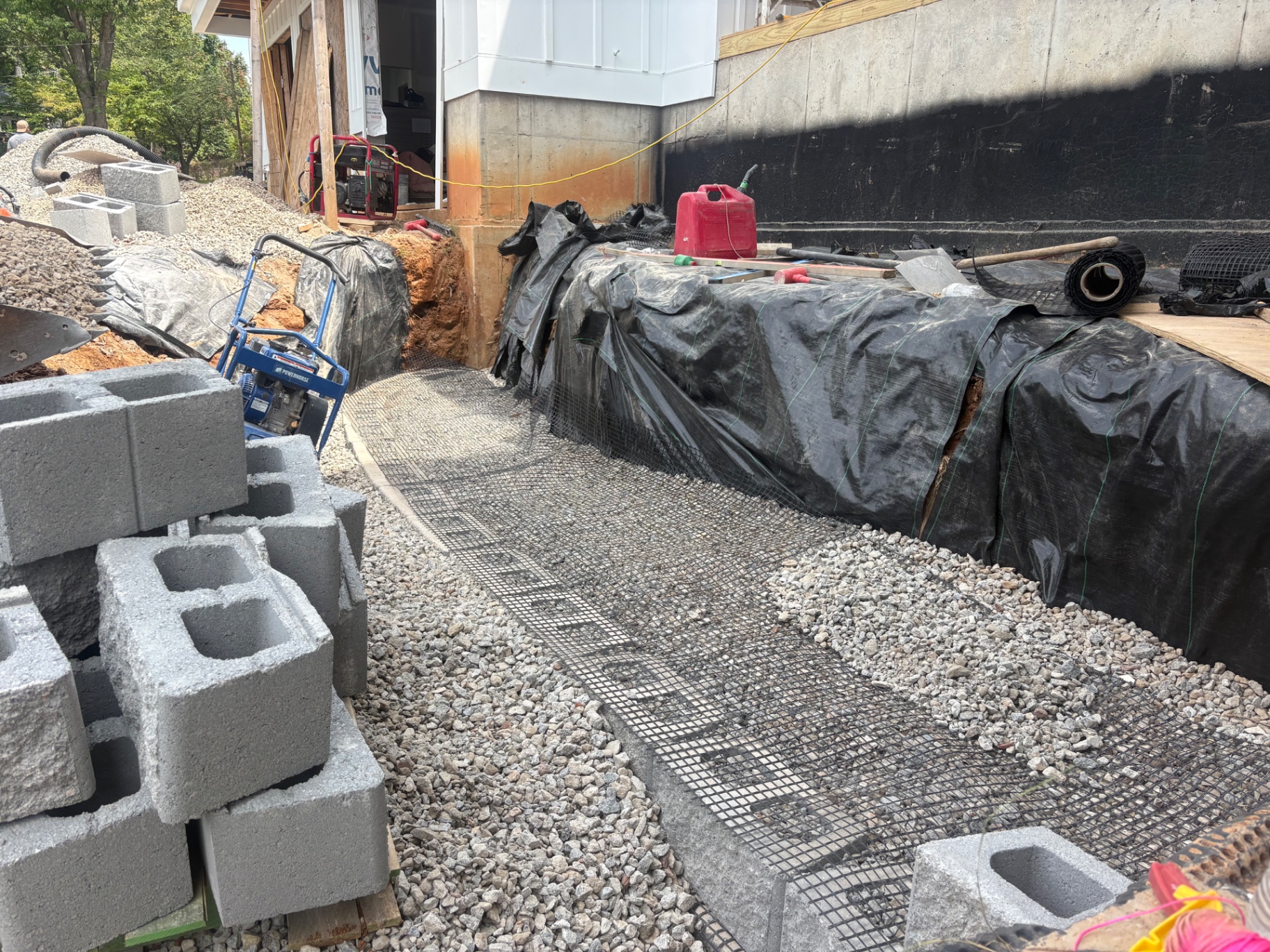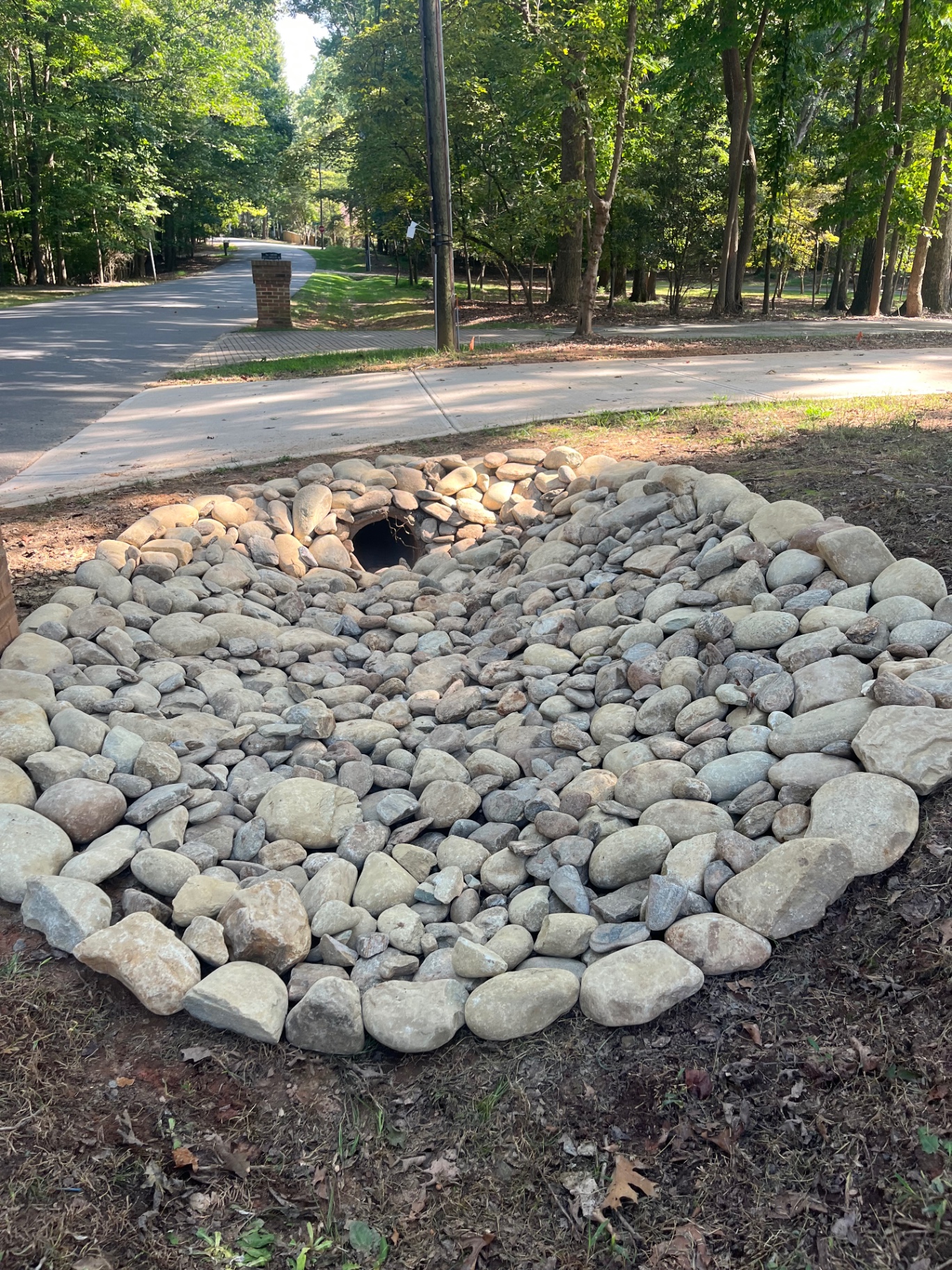
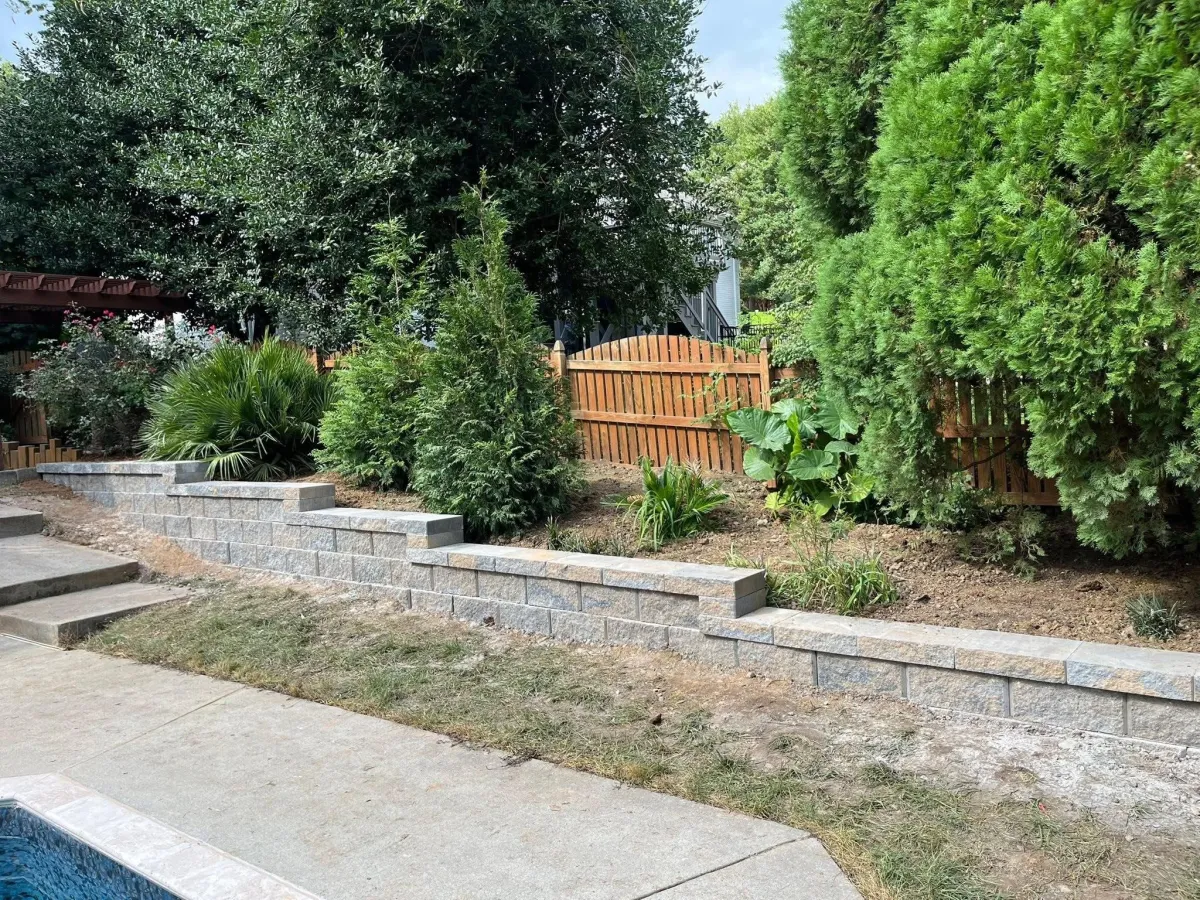
Site prep is the part nobody photographs and the part that determines whether the finished job holds up. It is also where most schedule surprises come from.
Locates and access
Before anything moves, utilities get located. We also plan access — where equipment enters, where material stages, and how we protect the lawn, driveway and existing plantings we intend to keep.
Clearing and demolition
Brush, failing plants, old edging, dead sod and any hardscape being replaced come out. Stumps get ground below finish grade so future settling does not dish the lawn or patio above them.
Rough grading and drainage
This is when the shape of the property gets set: fall away from the house, swales that carry water to an outlet, and subgrade for patios and walks. Drain lines and irrigation sleeves are installed now, while the site is open.
Base preparation
Hardscape gets excavated to depth and built up in compacted lifts of aggregate. Beds get soil amended and shaped. Cutting depth or skipping compaction here is the single most common reason patios settle and walls lean later.
- What good prep looks like on site: clean excavation to a consistent depth
- Aggregate placed and compacted in lifts, not one deep dump
- Drain and sleeve locations documented before backfill
- Positive fall confirmed with a level or laser, not by eye
Helpful outside reference
Before anyone digs, NC811 utility marking is required, and the OSHA trenching and excavation safety page explains why trench work needs care.
Frequently asked questions
How long does site prep take?
Anywhere from a day on a simple bed renovation to a week or more on a graded lot with clearing and drainage work.
Will heavy equipment damage my lawn?
There is usually some rutting on the access path. We plan the route, use mats where needed, and repair and reseed at the end.
Can existing plants be saved during prep?
Often yes — plants worth keeping can be flagged, protected, or dug and heeled in for replanting.
Want this looked at on your property?
We give free, no-pressure on-site estimates across Denver, Mooresville, Cornelius, Davidson, Huntersville and Troutman.