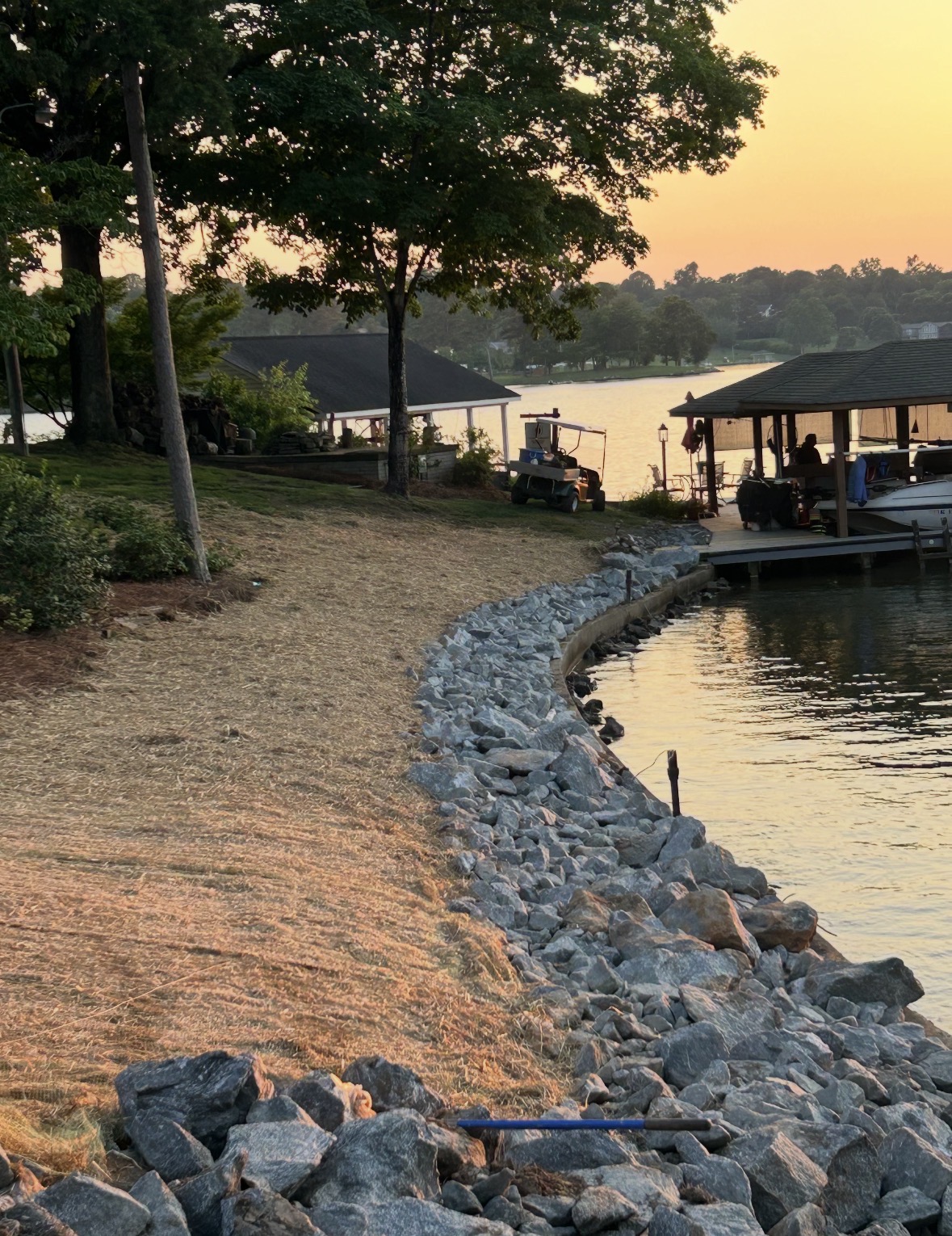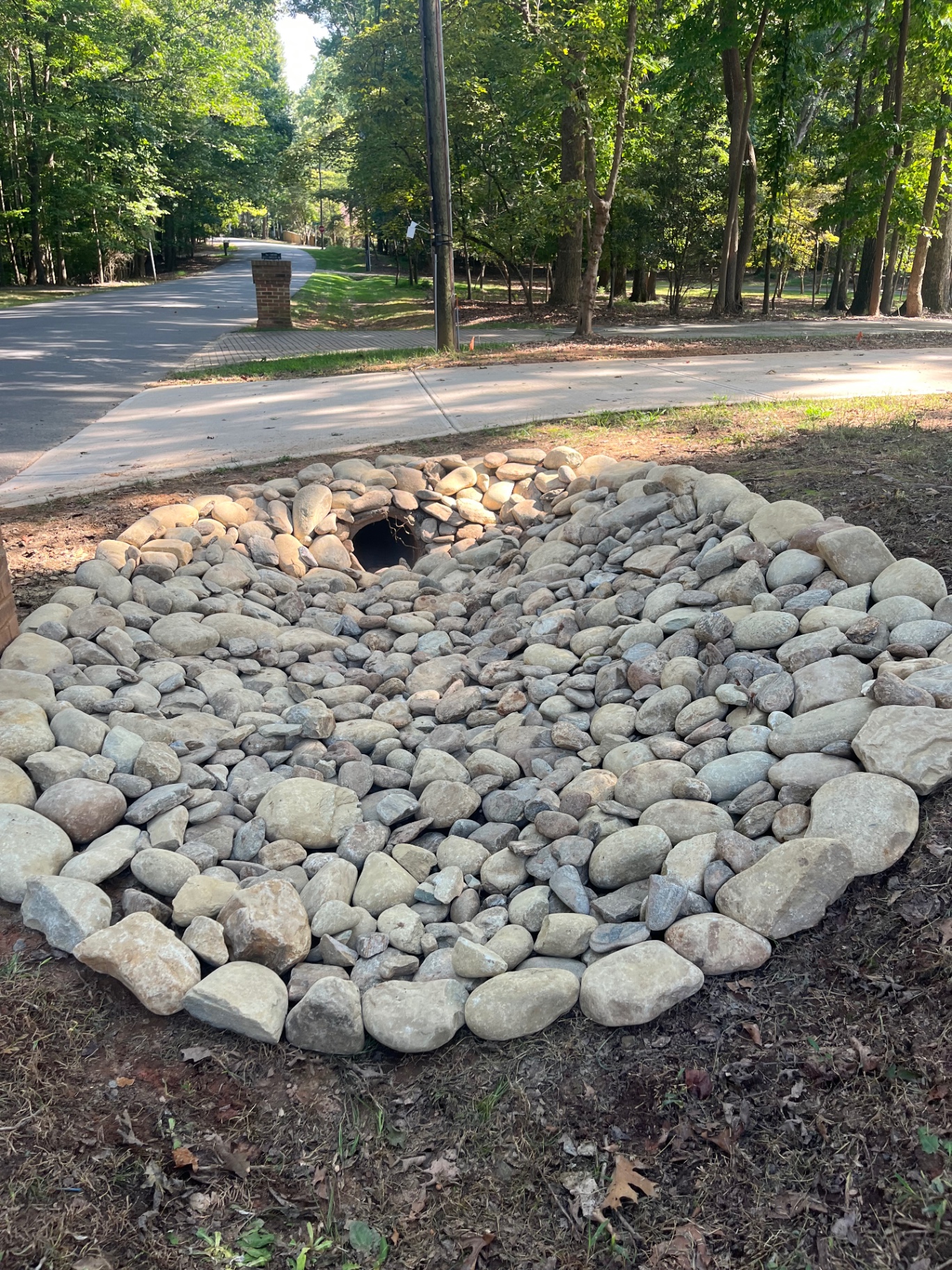
A dry creek bed moves water through the landscape while looking like a designed feature instead of a drainage ditch. Here's when they make sense for Lake Norman properties.
What a Dry Creek Bed Does
A dry creek bed is a stone-lined channel that moves surface water through the landscape — from a problem area to an outlet point — while looking like a natural stream bed rather than a drainage infrastructure installation. During a rain event, it carries water actively. During dry periods, it's a landscape feature: an interesting textural element with native or adapted plants along its banks.
When They Work Well on Lake Norman Properties
Dry creek beds are effective when: the slope is sufficient to move water by gravity without erosion, the volume of water to be moved isn't so large that the creek would overflow its banks during heavy rain events, and the path from problem area to outlet can be made to look natural. On Lake Norman properties with gentle-to-moderate slopes and a natural-looking outlet point (a lower lawn area, a slope edge, or a detention area), a dry creek bed solves a drainage problem while adding to the landscape's visual interest.
They're particularly useful as an alternative to underground pipe in areas where installing pipe would be expensive or disruptive — through established root zones, for example, or in areas with frequent small water flows that don't warrant buried infrastructure.
Construction Matters More Than Appearance
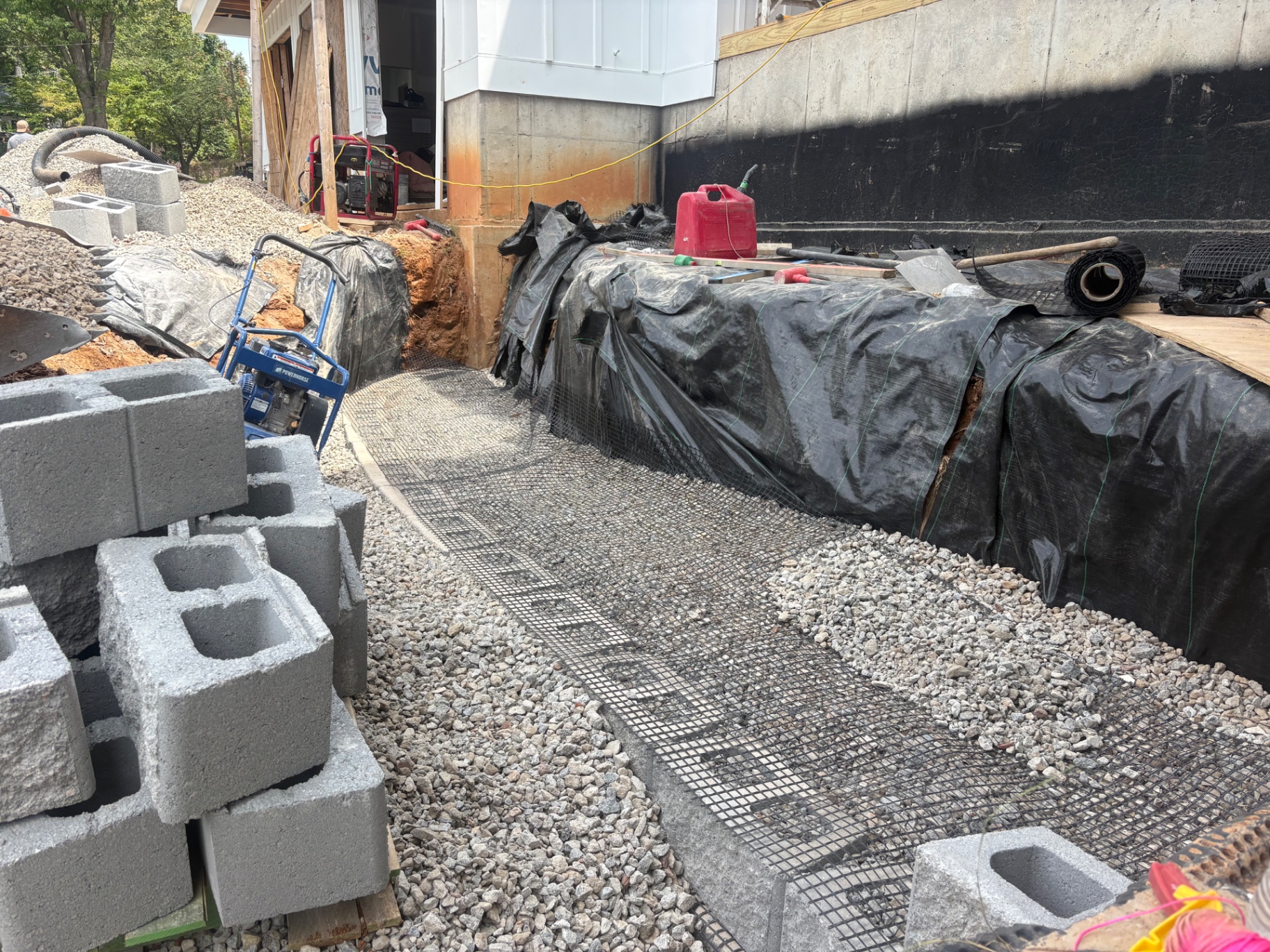
A dry creek bed that doesn't hold up during heavy rain is a maintenance problem, not a solution. The base of the channel needs to be excavated and lined with landscape fabric before stone is placed — this prevents the stone from sinking into the soil over time. Stone sizing matters: stones too small wash away during heavy flow; stones too uniform create an artificial look. A mix of stone sizes — some larger anchor stones, smaller fill between — looks natural and performs better.
The banks need planted or mulched material that holds soil without grass that requires regular mowing in an awkward channel location. Native plants suited to wet-dry conditions — wetland species aren't necessary; plants that tolerate occasional flooding are — work well.
⚠️ Dry creek beds are not appropriate for high-velocity flows. If water is moving fast enough to move stones during heavy rain, the creek needs structural reinforcement or the problem needs to be addressed with underground pipe rather than an open channel.
Schedule a free drainage assessment — we'll identify whether a dry creek bed or underground pipe is the right approach for your property.
Want this looked at on your property?
We give free, no-pressure on-site estimates across Denver, Mooresville, Cornelius, Davidson, Huntersville and Troutman.