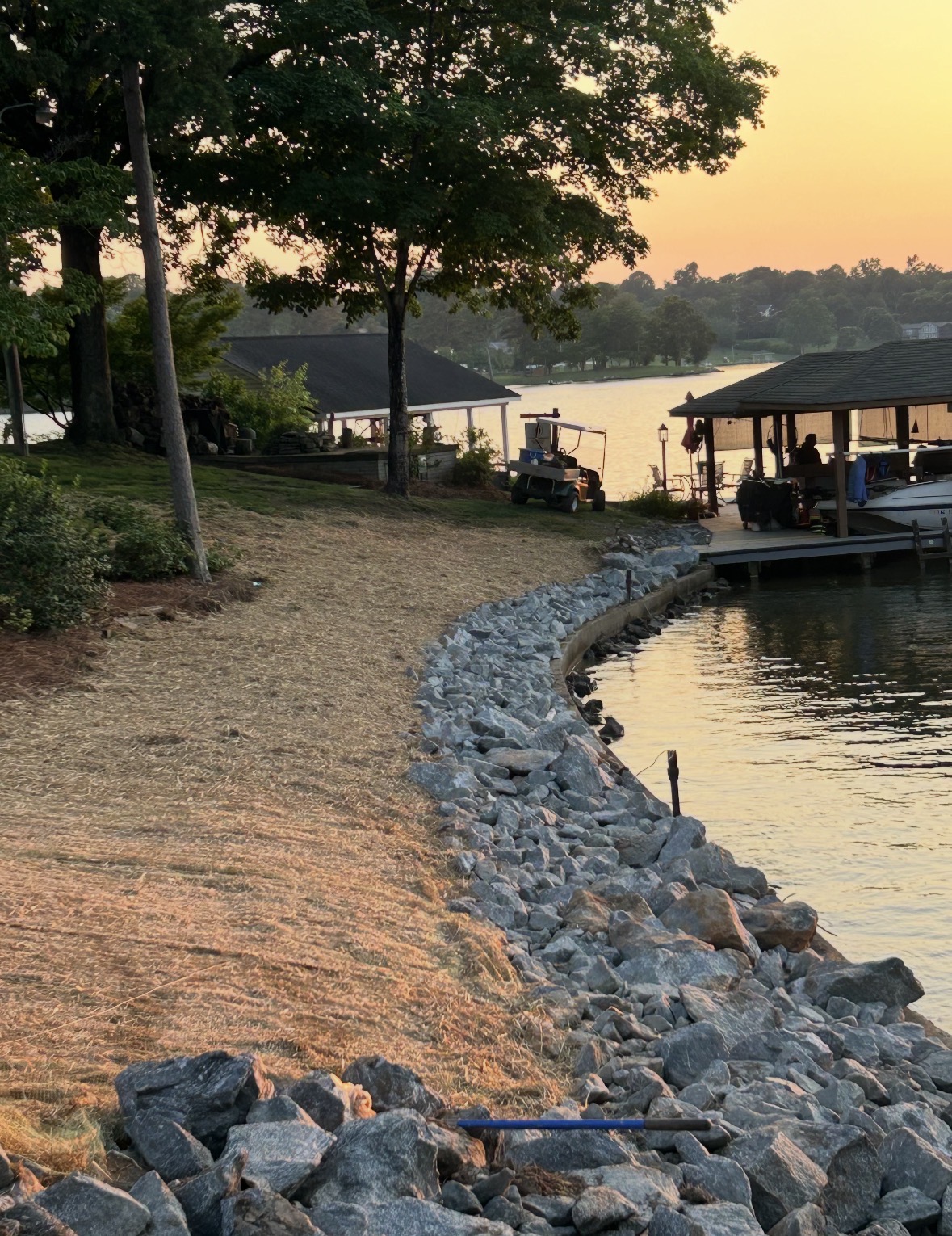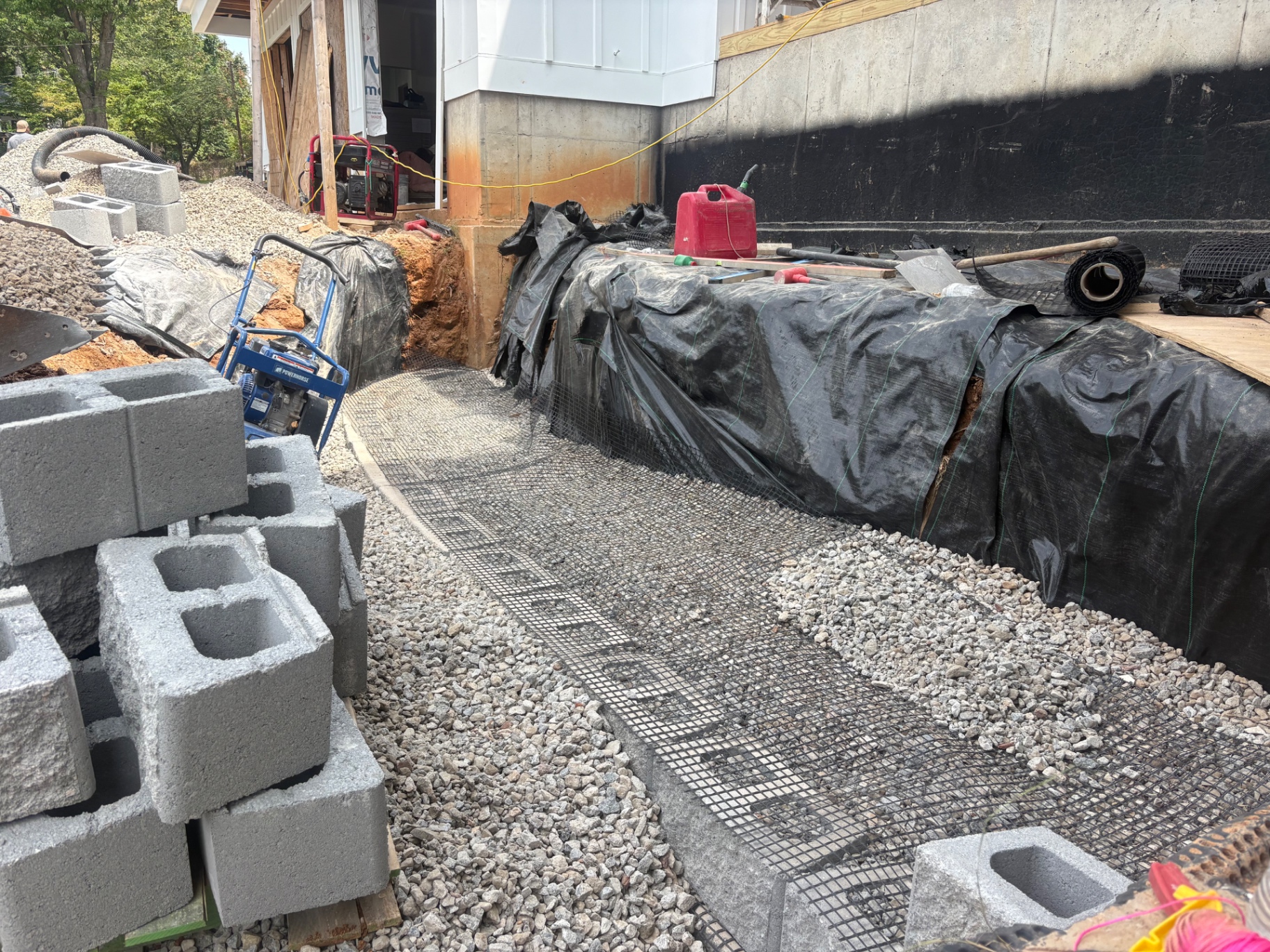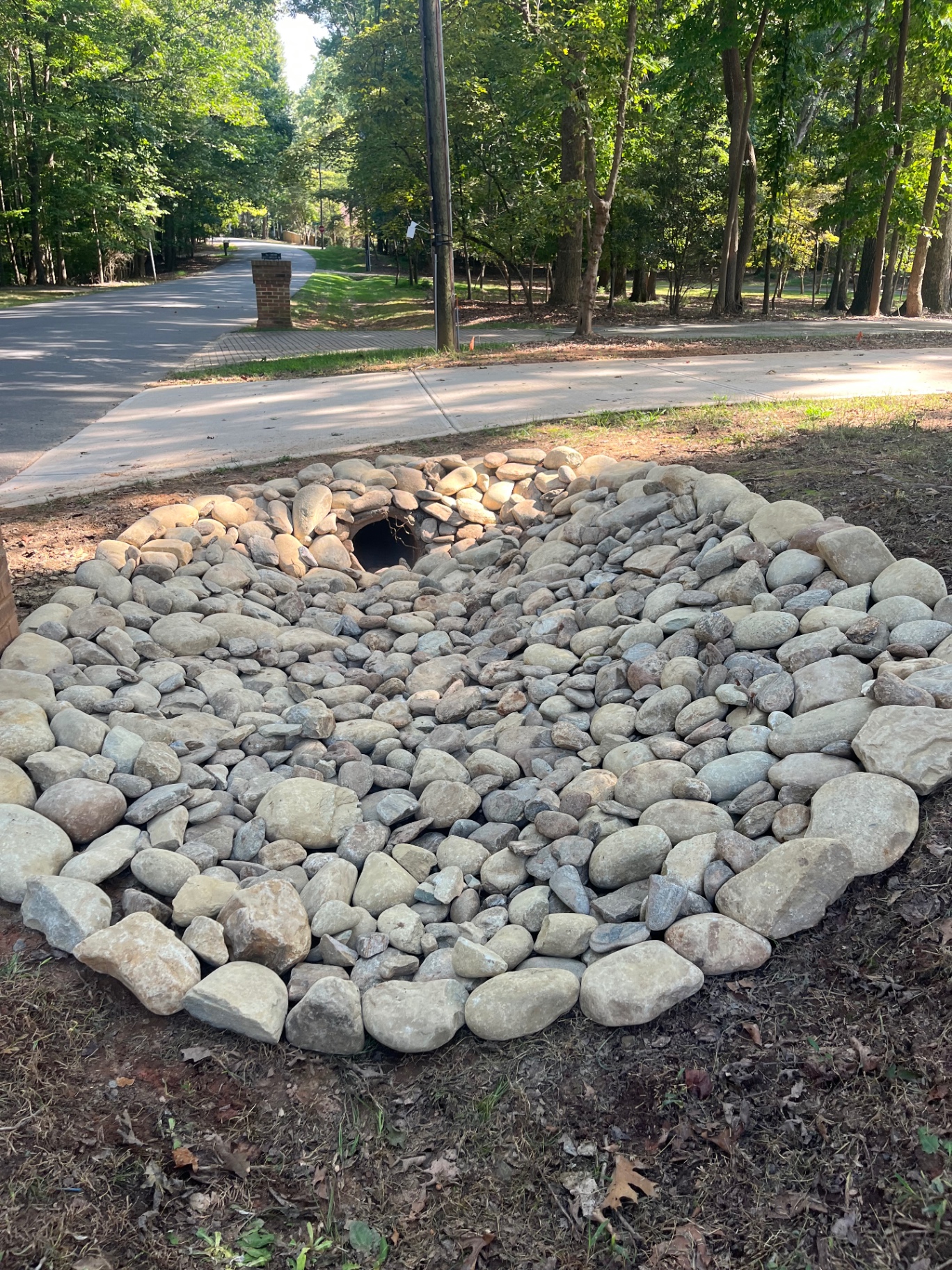
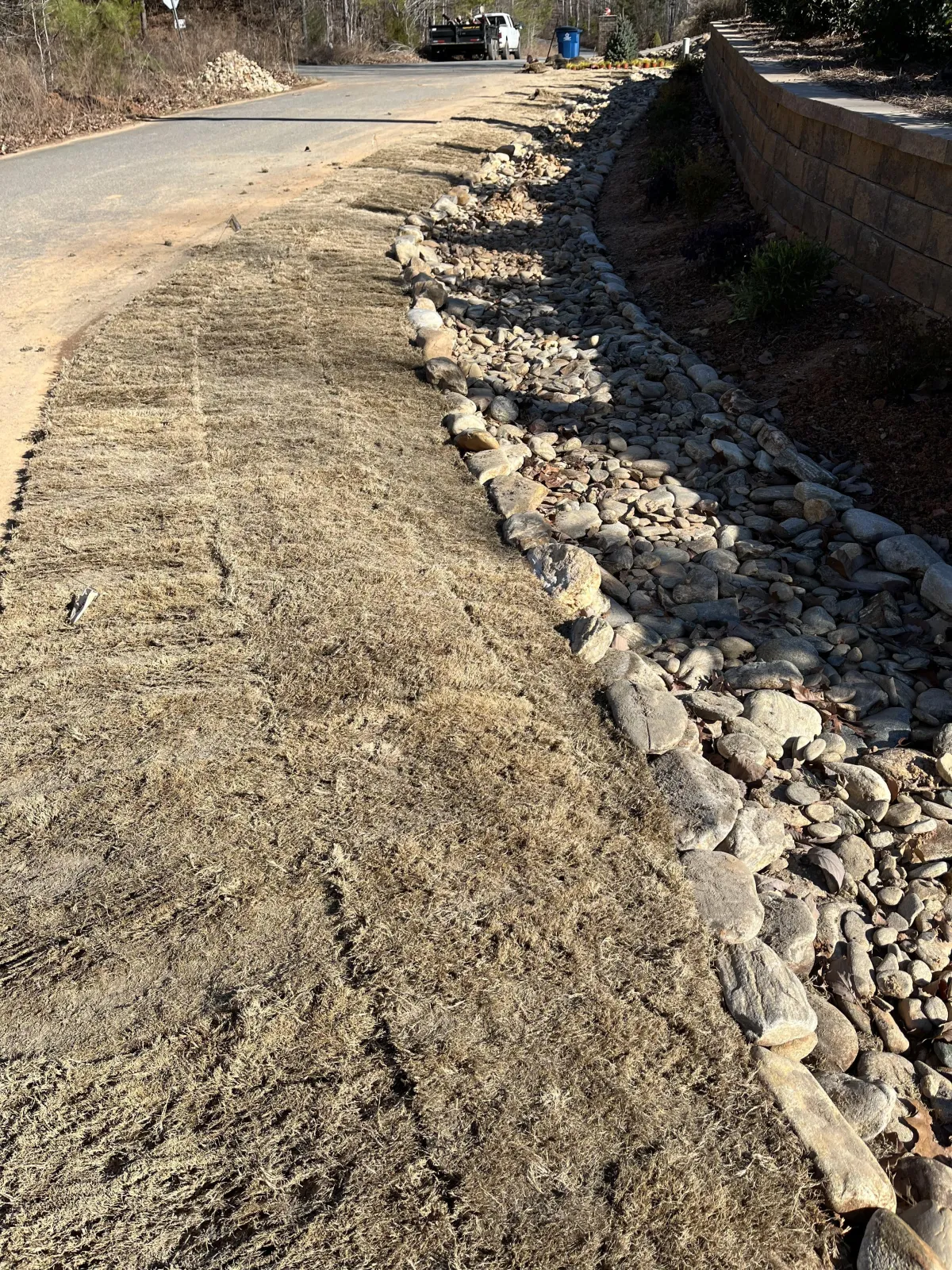
The pipe under your driveway apron is easy to forget until water is running across the driveway instead of under it. On rural and semi-rural lots around Lake Norman, that culvert is often the single most important piece of drainage on the property.
What the culvert and ditch do
A roadside ditch collects runoff from the road and the properties along it and carries it to an outlet. The culvert is the pipe that lets that flow continue under your driveway rather than spilling across it.
The system works only if the whole line works. A ditch that has silted in upstream, a culvert that is undersized, or a blocked outlet downstream all produce the same symptom at your driveway: water where it should not be.
Signs yours needs attention
Most culvert problems announce themselves during a heavy rain, which is the right time to go look.
- Water flowing over the driveway apron rather than through the pipe.
- Standing water in the ditch days after a storm.
- Soil eroding away at either end of the pipe, or a visible void beside it.
- The driveway surface sinking near the pipe, which can mean soil is washing out underneath.
- Silt, leaves, or debris filling the pipe inlet.
- A crushed or rusted-through pipe end.
Maintenance you can handle
Keeping the inlet and outlet clear of leaves, sediment, and yard debris is the highest-value routine task, especially after storms and in fall.
Keep ditch vegetation mowed rather than letting it grow into a dam, and avoid filling the ditch with grass clippings, mulch, or brush.
Do not regrade the ditch on your own initiative — the profile and outlet were set for a reason, and changes can move a problem to a neighbor. Confirm who is responsible before altering anything.
When it needs replacement or resizing
A crushed, separated, or rusted-through pipe needs replacement, not cleaning. So does a culvert clearly too small for the flow it receives, which shows up as water ponding on the upstream side during ordinary storms.
This is work that involves excavation, proper bedding, compacted backfill, and headwalls or stabilized ends so the soil around the pipe does not wash out.
Because culverts sit in the right-of-way in many cases, the road authority — NCDOT or the local jurisdiction, depending on the road — typically has requirements for size, material, and installation. Check before ordering a pipe.
How it ties into the rest of the yard
The culvert is only the last link. If your yard drainage outlets into that ditch, the whole system depends on the ditch line staying clear.
Conversely, a backed-up culvert can push water back into the lower part of your property, which homeowners often misdiagnose as a yard drainage problem. Our article on driveway drainage solutions covers the surface side of the same area.
Southern Style Turf & Design handles driveway and site drainage around Lake Norman, including the grading that feeds a culvert and the outlets that leave it.
Frequently asked questions
Who is responsible for the culvert under my driveway?
It depends on the road and jurisdiction. Driveway culverts serving a private drive are commonly the property owner's responsibility even when they sit in the right-of-way — confirm with the road authority for your street.
Can I clean out a culvert myself?
Clearing debris and sediment from the visible ends is routine homeowner maintenance. Anything involving digging around the pipe or changing the ditch profile should be checked first.
Why does water cross my driveway during every storm?
Usually a blocked or undersized pipe, a silted-in ditch, or an outlet that cannot take the flow. Watch the ditch during a rain to see which end the problem is on.
Want this looked at on your property?
We give free, no-pressure on-site estimates across Denver, Mooresville, Cornelius, Davidson, Huntersville and Troutman.