Plenty of homeowners discover a drainage easement only when a project stalls — a wall that cannot go where they wanted, or a fence that has to move. Knowing what the easement is for makes those limits much easier to plan around.
What a drainage easement is
An easement is a recorded right for someone else — often a municipality, HOA, or neighboring property — to use a defined strip of your land for a specific purpose. With a drainage easement, that purpose is conveying stormwater.
You still own the land. What you generally do not have is the right to obstruct the flow of water through it or to block access for maintenance.
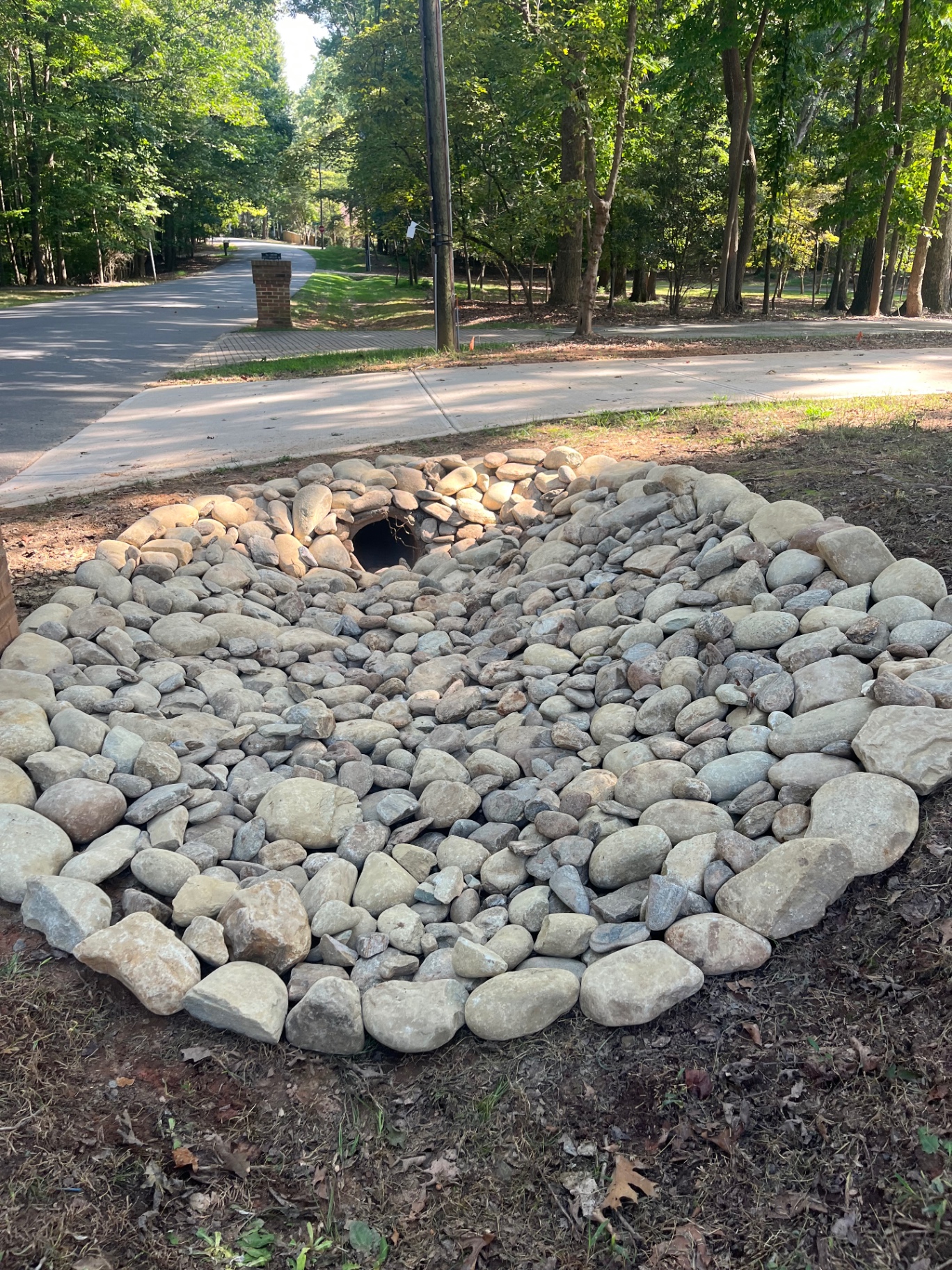
The easement may contain a swale, a pipe, a headwall, a ditch, or nothing visible at all — an easement can exist for water that only appears during large storms.
Finding out whether you have one
Your recorded plat and the survey from your closing are the primary sources. Easements are drawn on the plat with dimensions from the property line.
County GIS mapping is a useful first look, and the plat on file with the register of deeds is the authoritative record. Your HOA may also maintain documentation of common drainage features.
If a project is close to a boundary and you are unsure, checking is far cheaper than moving finished work.
What you usually cannot do in one
Specifics depend on the easement language, but the typical restrictions follow the same logic: nothing that blocks water or prevents access.
- Building a retaining wall, structure, or permanent hardscape across the flow path.
- Filling or regrading in a way that changes how water moves through the easement.
- Planting trees or dense shrubs where they would obstruct flow or damage a pipe.
- Installing a solid fence across a swale without an approved gap for water.
- Storing material, fill, or debris in the easement area.
What you can usually do
Turf, low groundcover, and shallow-rooted plantings are commonly acceptable, and keeping the swale mowed and clear is often the owner's responsibility anyway.
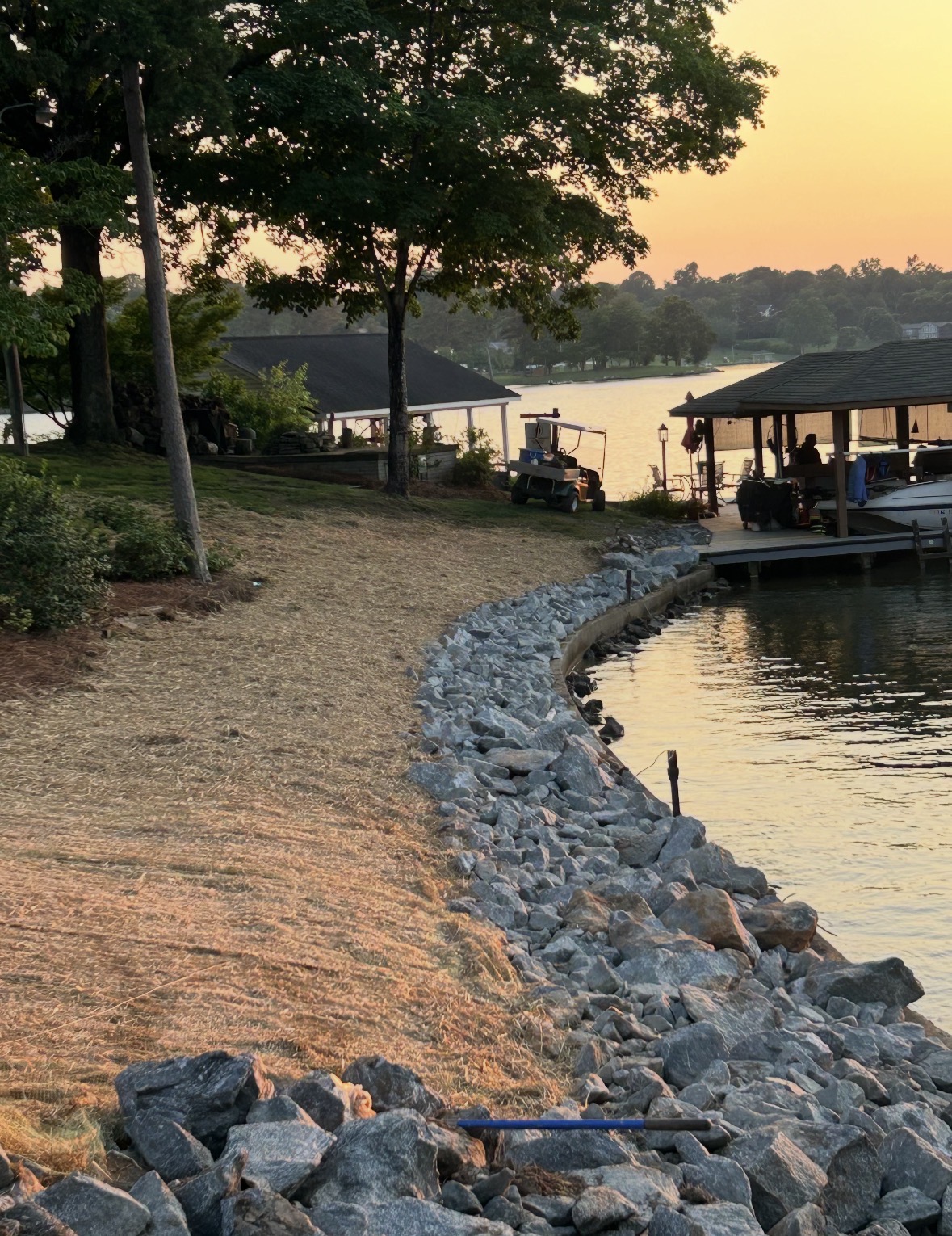
A swale can frequently be made more attractive without changing its function — stone lining, careful shaping, and plantings along its edges rather than in its bottom. Our comparison of a swale versus a pipe explains the trade-offs when you want the water out of sight.
Any change to the shape or capacity should be confirmed with whoever holds the easement before work begins.
When water from an easement causes problems
An easement is designed to carry water past your property, not to dump it into your lawn. If it overtops, erodes, or has silted in, that is worth documenting and reporting to the entity responsible for it.
Photograph it during an actual storm. Timing and volume tell the story far better than a dry-day description.
Southern Style Turf & Design works around recorded easements on drainage projects across the Lake Norman area, designing systems that outlet legally rather than pushing a problem onto a neighbor. Our drainage consulting service is often the right first step when property lines are involved.
Helpful outside reference
North Carolina's adopted building codes are published on the NC Office of State Fire Marshal building codes page; your county permit office applies them locally.
Frequently asked questions
Can I plant trees in a drainage easement?
Usually not. Trees can obstruct flow and their roots can damage buried pipe. Turf and low plantings are more commonly permitted, but check the easement language.
Who maintains a drainage easement?
It varies. Routine mowing is often the property owner's job, while the pipe or structure itself may belong to the municipality or HOA. The recorded document and your HOA's rules define it.
Does an easement lower my property value?
It limits what can be built in that strip, which matters most on small lots. On many properties the easement runs along a boundary and has little practical effect on how the yard is used.
Want this looked at on your property?
We give free, no-pressure on-site estimates across Denver, Mooresville, Cornelius, Davidson, Huntersville and Troutman.