A walkway is judged on two things: whether it feels comfortable to walk, and whether it still looks straight in five years. Width handles the first. Base handles the second.
Getting the width right
A primary front walk should let two people walk side by side — generally 4 to 5 feet. Secondary paths to a garden or side gate work at 3 feet. Anything narrower than 3 feet reads as a garden accent, not a route.
Material comparison
- Concrete pavers — most versatile, resets if it settles, wide color and pattern range.
- Natural flagstone — irregular, high-end look; needs a skilled setter and thoughtful joints.
- Poured concrete — lowest up-front cost, cracks over time on clay, repairs are patches.
- Stepping stones — informal and inexpensive, best for low-traffic garden paths.
The base is the walkway
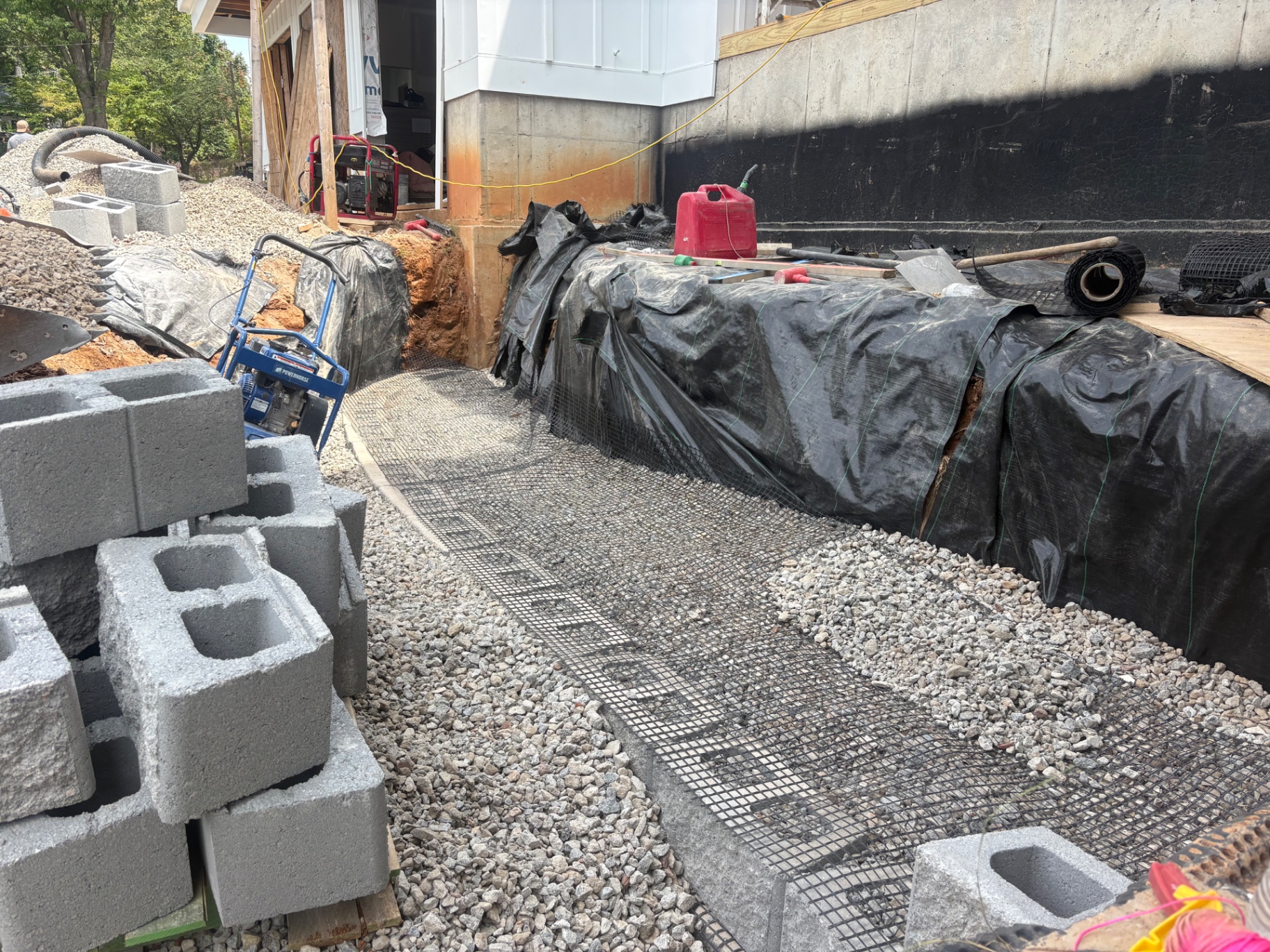
Under any paver or flagstone walk there should be excavation to depth, compacted aggregate in lifts, a bedding layer, edge restraint on both sides, and polymeric joint sand. Skip the edge restraint and the outer stones migrate every winter until the path loses its line.
Drainage and safety
A walk should pitch slightly to shed water to one side and away from the house — a level walk holds puddles and grows algae, which is slick. Steps need consistent riser heights, and any run of steps should be lit for safety.
Helpful outside reference
Industry installation standards for segmental pavers are published by the Interlocking Concrete Pavement Institute.
Frequently asked questions
How long does a walkway take to install?
Most residential front walks are one to three days depending on length, steps and access.
Can a paver walkway match my patio?
Yes — using the same product with a coordinating border ties the two together without looking like an add-on.
Will tree roots lift a paver walk?
They can, but pavers can be lifted, roots managed and the surface reset — unlike concrete, which must be broken out.
Want this looked at on your property?
We give free, no-pressure on-site estimates across Denver, Mooresville, Cornelius, Davidson, Huntersville and Troutman.