Troutman properties on the northern end of Lake Norman tend to have larger lot sizes and more natural topography than the more densely developed southern Lake Norman communities. This means more sloped ground, more mature tree canopy, and more natural drainage patterns — which creates both opportunities and challenges for landscape work.
Troutman's Lot Characteristics
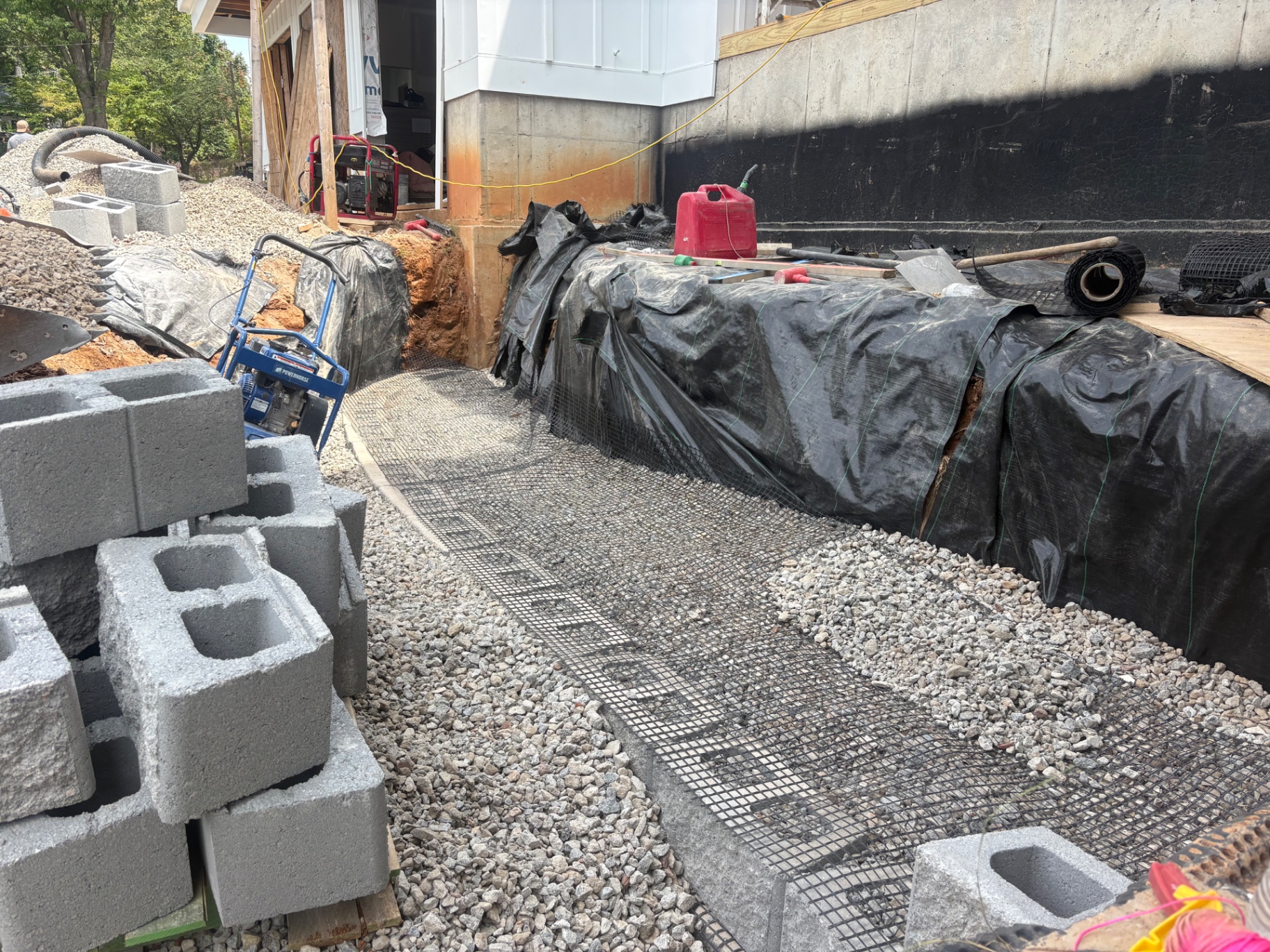
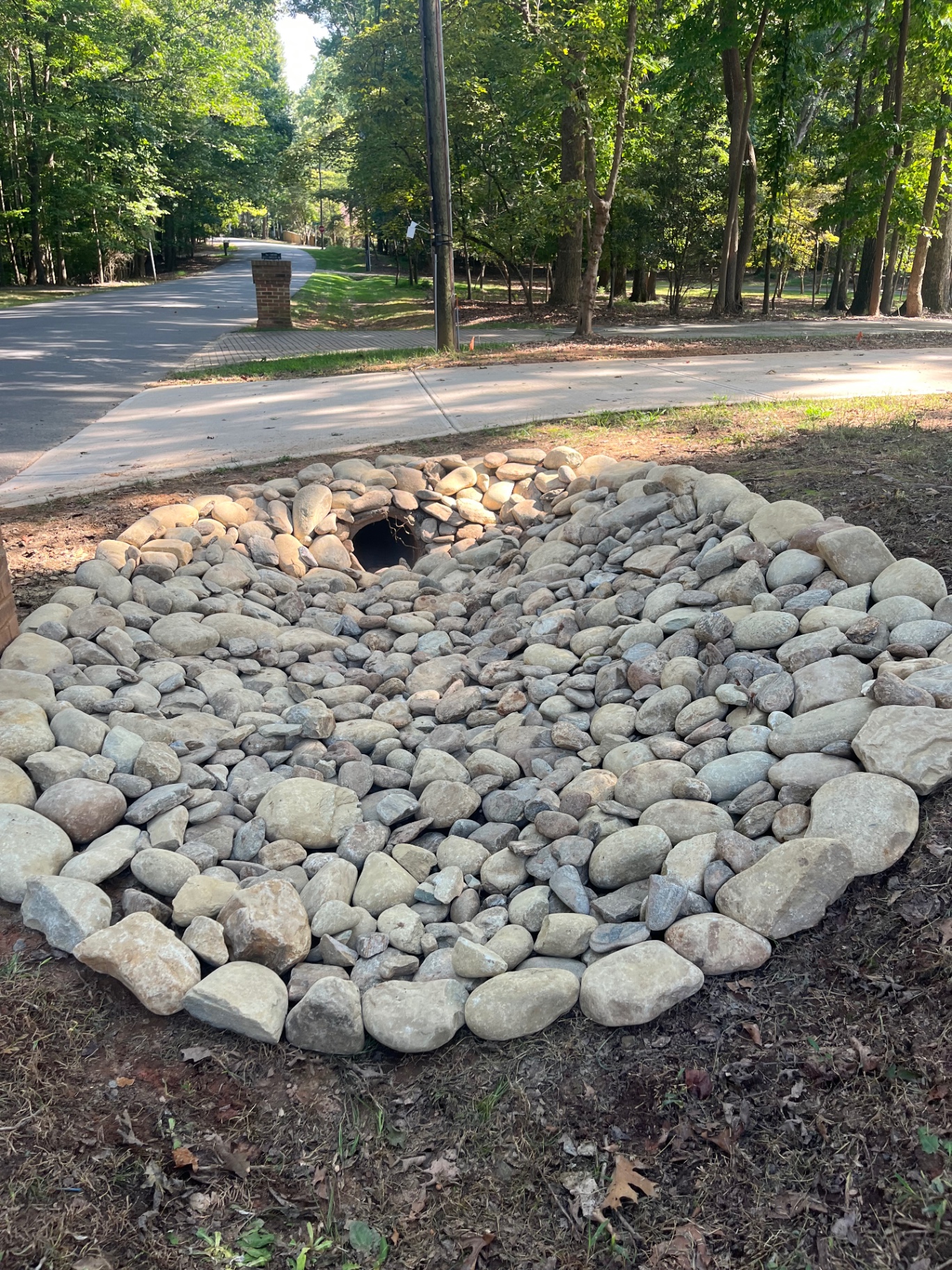
The larger lots give homeowners more design options: space for significant privacy screening, room for terraced retaining walls that create multiple usable levels, and opportunities for outdoor living designs that smaller lots can't accommodate. The natural topography means drainage is often more complex — multiple drainage paths, varied slope grades, and more significant water volumes during heavy rain events.
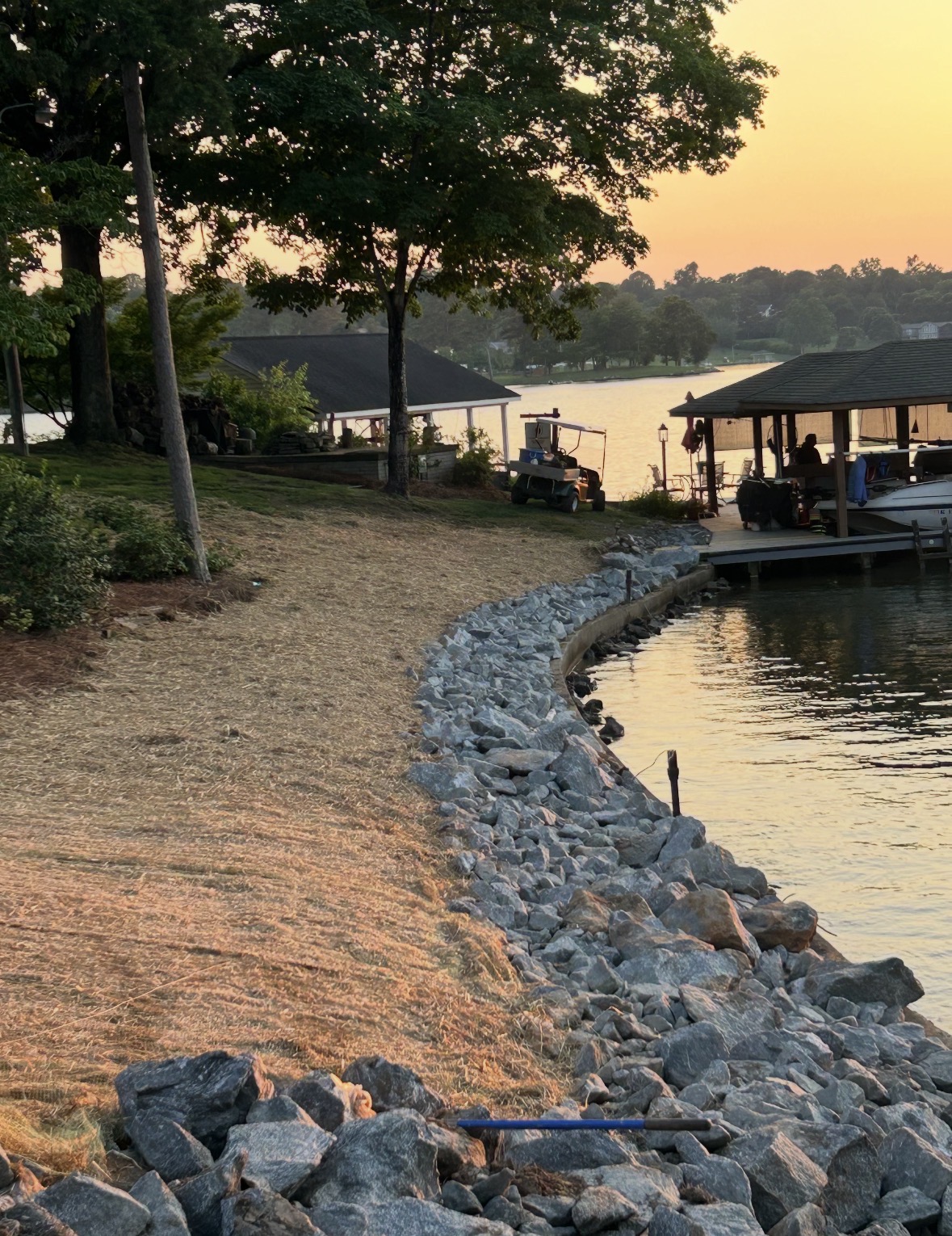
Shoreline Considerations
Troutman has significant shoreline access on Lake Norman, and the Duke Energy buffer zone and shoreline management requirements apply here as they do throughout the lake. Properties with waterfront access often need erosion stabilization at the shoreline, riparian plantings within the buffer zone, and grade management above the buffer to direct runoff in ways that don't accelerate shoreline erosion.
Mature Landscapes
Many Troutman properties have established landscaping from when the lake communities developed in the 1970s–1990s. Mature trees, established beds, and existing infrastructure are the starting point rather than a blank lot. Renovation projects — modernizing dated landscaping while preserving mature trees, correcting drainage that's developed over decades, and replacing plant material that's reached the end of its useful life — are common in these established Troutman neighborhoods.
We serve Troutman as part of our Lake Norman service area — learn more about our Troutman coverage or schedule a free site visit.
Want this looked at on your property?
We give free, no-pressure on-site estimates across Denver, Mooresville, Cornelius, Davidson, Huntersville and Troutman.