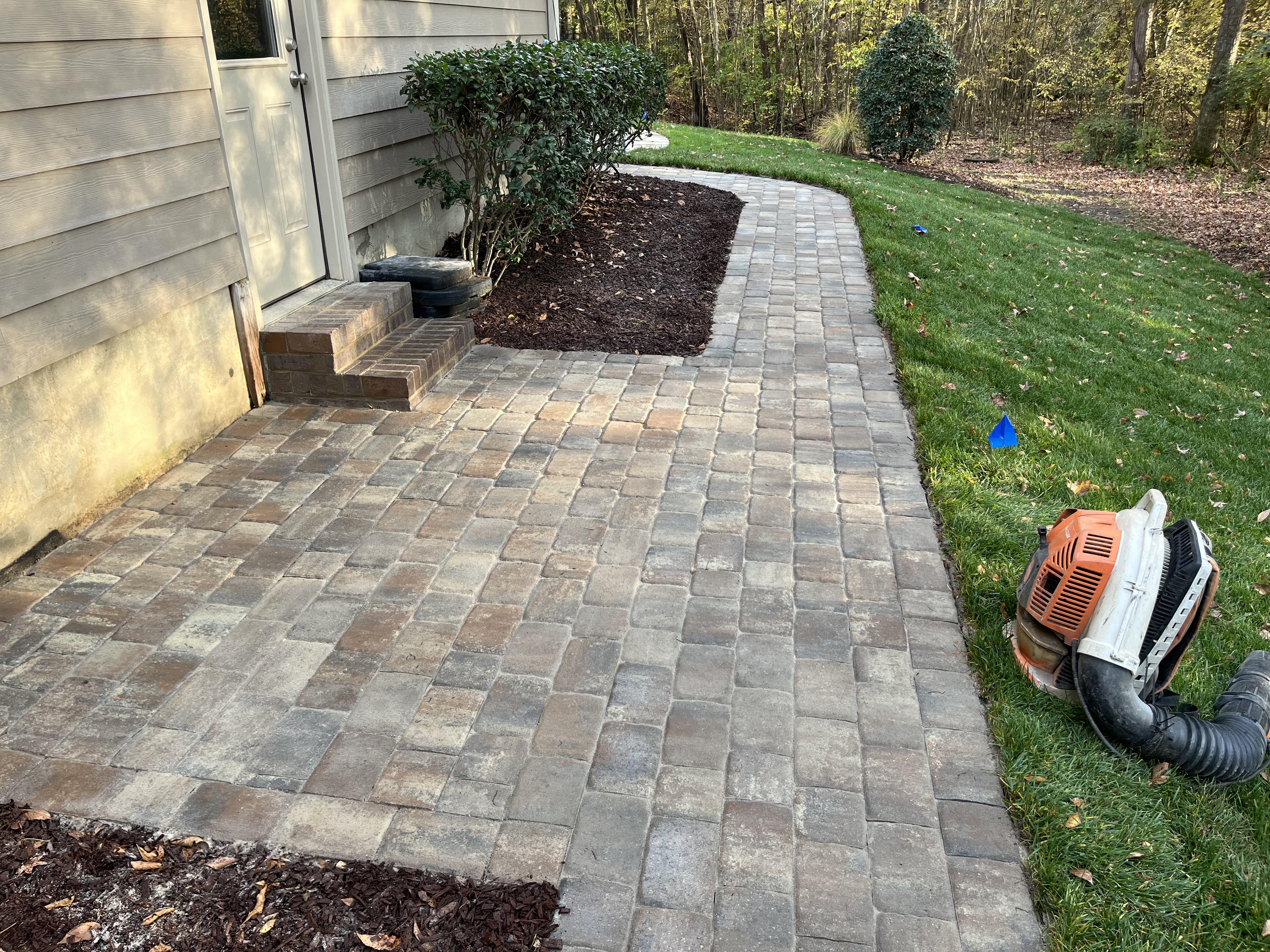
Polymeric sand in paver joints keeps pavers locked in position and weeds out. Here's what normal wear looks like in Lake Norman's climate and when the joints need attention.
What Joint Sand Does
The sand between paver joints — typically polymeric sand in modern installations — does three things: it locks adjacent pavers together so they move as a unit rather than individually, it reduces the gap where weed seeds can germinate, and it prevents insects from establishing colonies beneath the pavers. None of these functions work if the joint sand is missing or degraded.
Why It Degrades in Lake Norman
Lake Norman's climate challenges joint sand in a few ways. Heavy rainfall events wash fine sand from joints if the polymeric sand wasn't activated correctly at installation (it needs adequate wetting and curing time to harden). Freeze-thaw cycles break down the polymer bonds over time. And pressure washing — the instinct for cleaning a dirty patio — blows joint sand out of the joints if done carelessly.
How to Tell If Joint Sand Needs Replacement
Visible joint gaps — pavers that have visible spaces between them where there should be sand — are the clearest sign. Pavers that rock when walked on indicate joints that have lost their compaction and locking function. Weed growth in joints indicates that the sand layer is thin enough for weed seeds to reach soil.
When to Replace It
Well-installed polymeric sand in a properly activated installation typically lasts 5–10 years before joint repair is needed. Annual inspections — look for open joints, rocking pavers, and weed establishment — catch problems before they affect paver stability. Replenishing joint sand is a maintenance task most homeowners can do themselves with commercially available polymeric sand and a leaf blower; re-compacting settled areas after joint sand replacement requires a plate compactor.
Questions about paver patio maintenance or repairs in Lake Norman? Free assessment — 704-460-2019.
Helpful outside reference
Industry installation standards for segmental pavers are published by the Interlocking Concrete Pavement Institute.
Want this looked at on your property?
We give free, no-pressure on-site estimates across Denver, Mooresville, Cornelius, Davidson, Huntersville and Troutman.