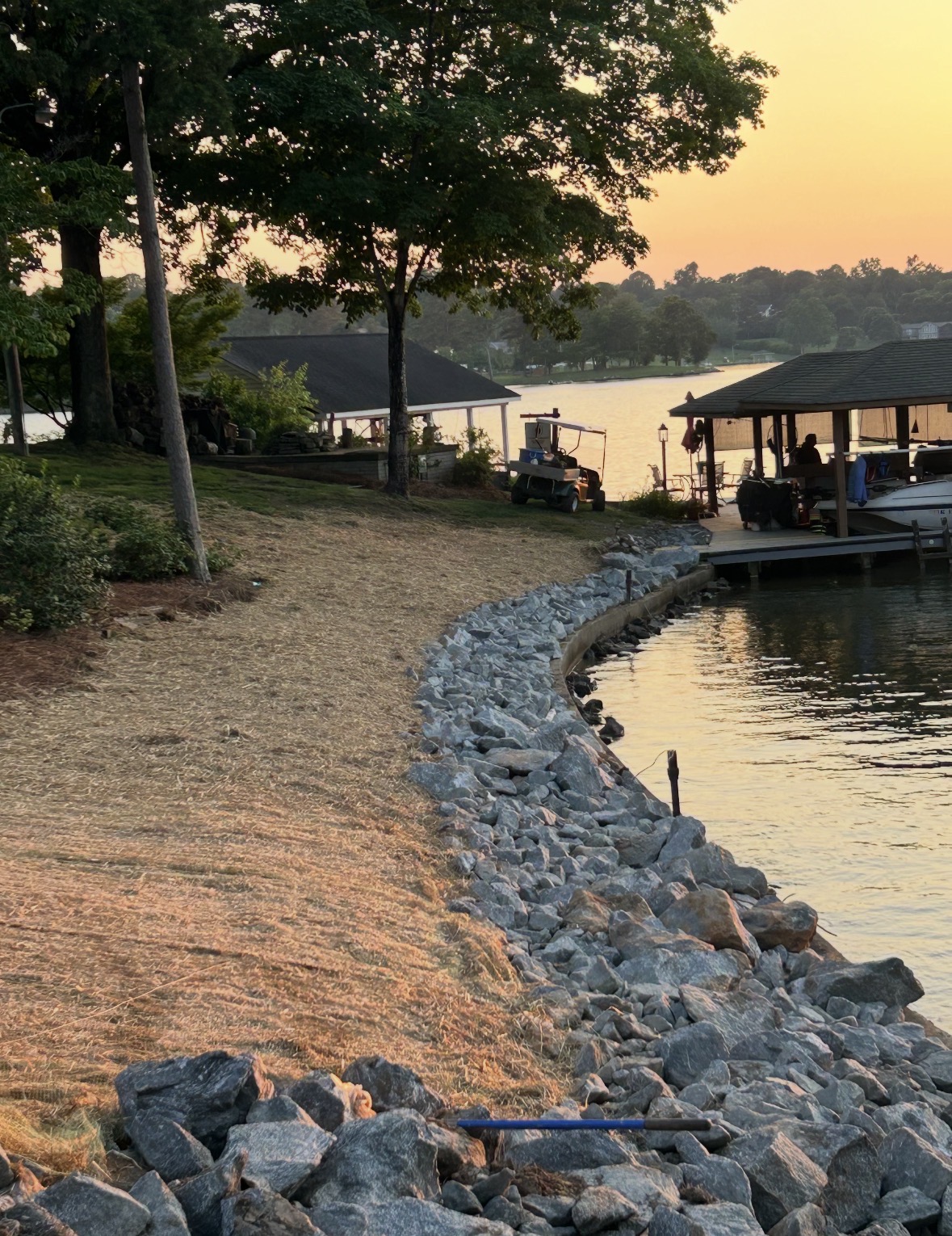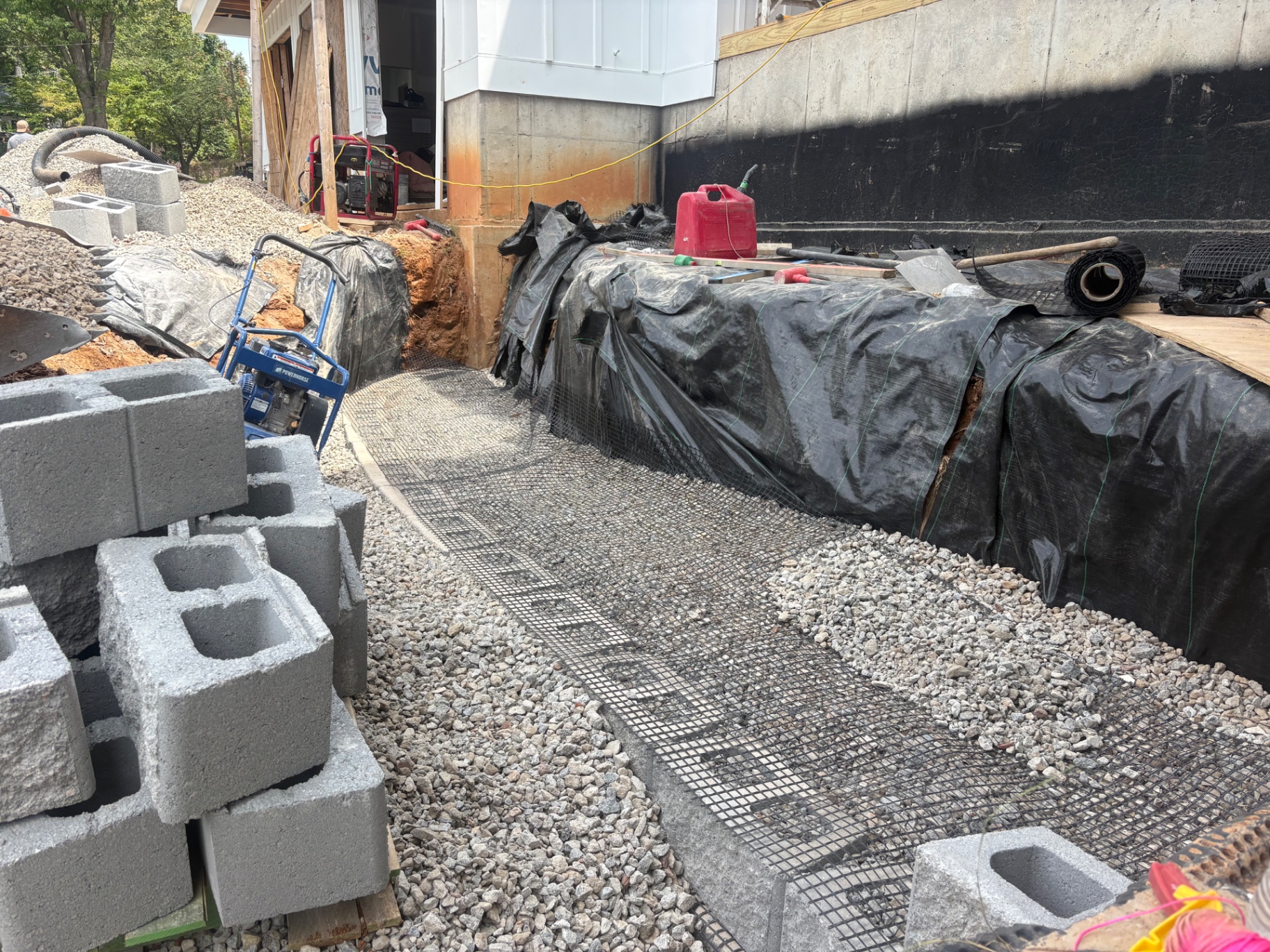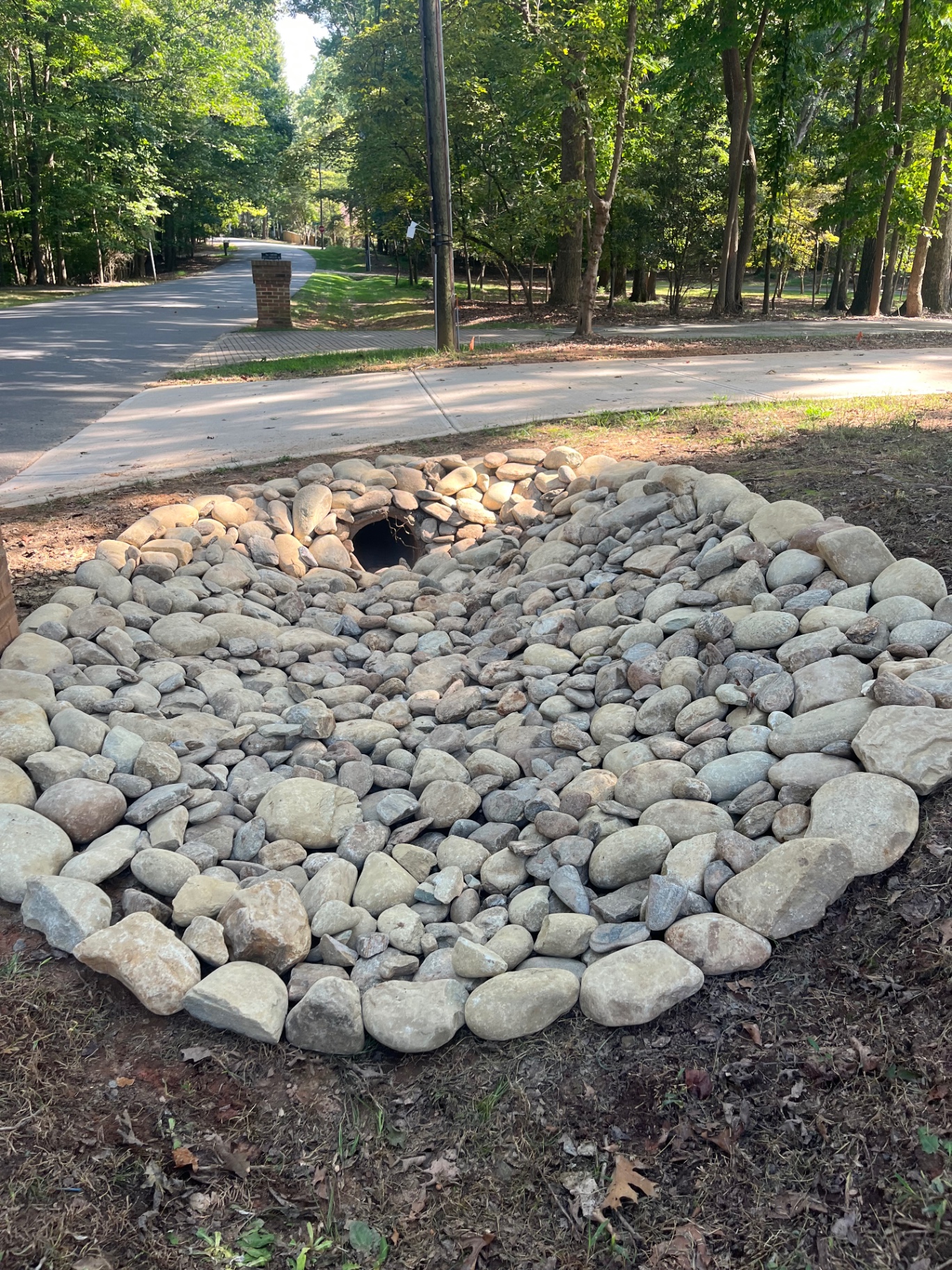
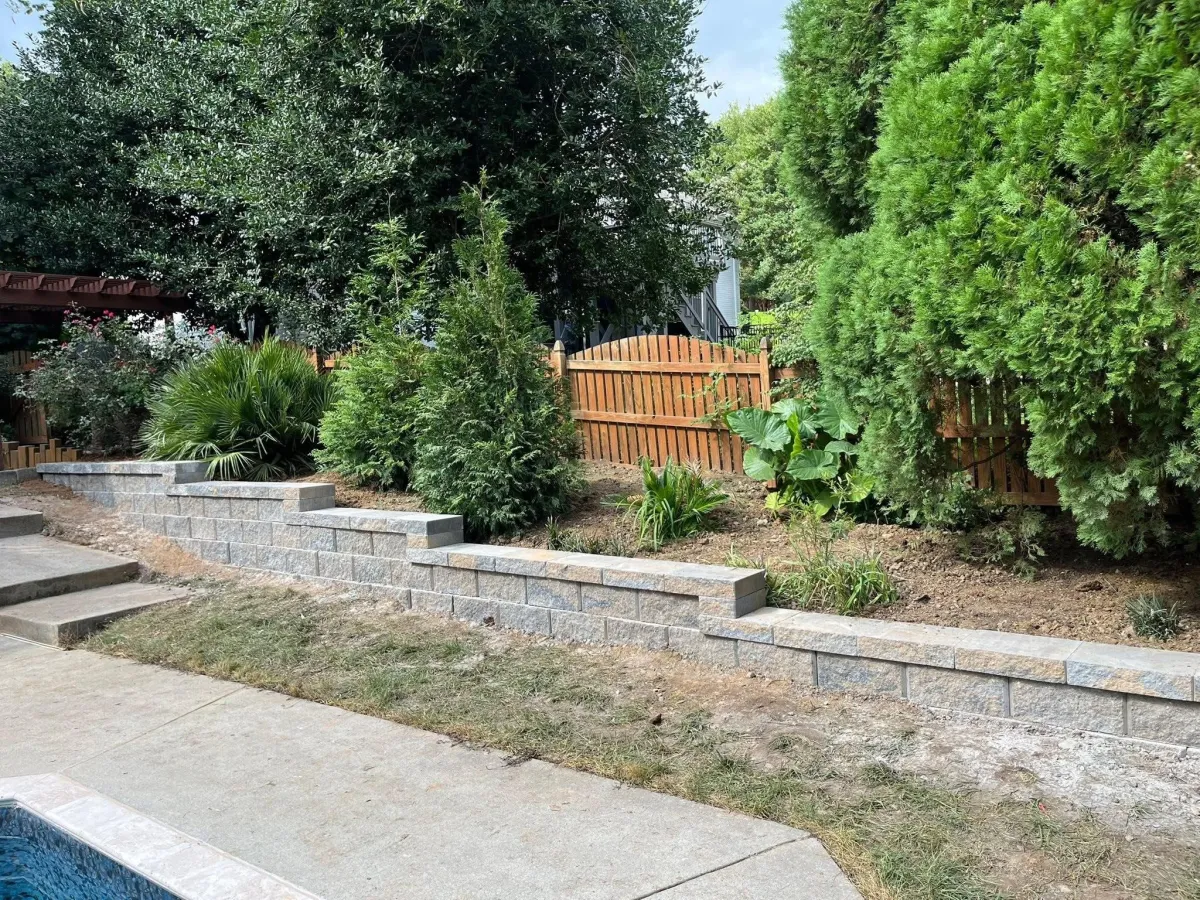
New construction homes in Lake Norman routinely come with stripped topsoil, compacted subsoil, and drainage that barely meets code. Here's what to address in year one before problems compound.
What Happens to Soil During Construction
Building a home involves heavy equipment moving across the site repeatedly. By completion, the topsoil has typically been stripped or buried under subsoil, and the remaining soil compacted to a fraction of its original porosity. Grass seed or sod goes down on this compacted, nutrient-depleted base — and either struggles immediately or establishes a shallow root system that fails the first dry summer.
Most new construction landscaping is designed to pass final inspection and transfer with the house. It's not designed for long-term performance — and drainage typically does just enough to keep water off the foundation and away from neighboring lots.
Year One Priorities
Soil assessment first. A rough compaction test: push a screwdriver 6 inches into moist soil. If it takes significant force, soil is compacted and aeration or tilling before planting is worthwhile.
Drainage mapping. Walk your yard during and after heavy rain. Where does water go? Where does it pool? You want this picture before installing anything that might change drainage patterns.
Address grade before planting. If the builder's finish grade has created low spots or drainage running toward the house, correct those before investing in plants.
Common New Construction Problems
Topsoil stripped and never replaced: Top-dress lawn areas with 2–4 inches of quality topsoil before overseeding. Amend planting beds heavily before installing shrubs and trees.
Downspouts draining directly onto grade: Extend downspouts at least 6 feet from the foundation or connect to underground drain systems.
Sod installed on compacted clay: Core aerate, topdress with compost, overseed thin areas. If sod isn't establishing after two growing seasons, soil preparation before reinstallation is the right call.
No privacy from neighbors: Privacy screening installed in year one grows into meaningful separation within 2–3 years.
Schedule a free first-year landscape consultation — we build a priority list and a plan before year-two problems start showing up.
Want this looked at on your property?
We give free, no-pressure on-site estimates across Denver, Mooresville, Cornelius, Davidson, Huntersville and Troutman.